
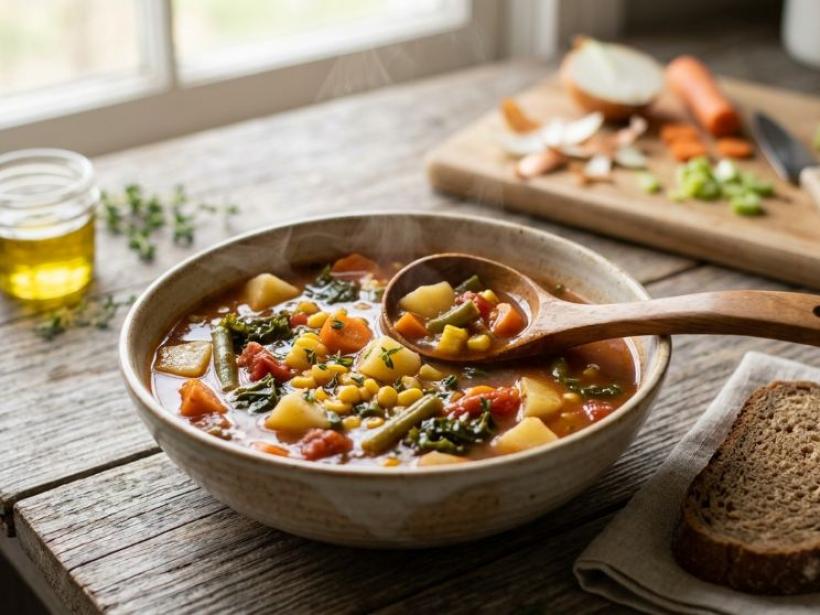

Most recipes with vegetable soup share the same starting point: onion, carrot, and celery cooked down until soft, then built up with broth and whatever else is on hand. That flexibility is the whole point. This isn't a recipe that demands a specific grocery list; it's a method that works with almost any vegetables sitting in the crisper drawer, as long as the base gets built the same way every time.
Active Time: 20 minutes
Total Time: 50 minutes
Servings: 6
Ingredients
These soup recipes for vegetables all lean on the same core group, with the rest open to substitution.
- 2 tbsp olive oil, 1 onion diced, 2 carrots diced, 2 celery stalks diced, 3 garlic cloves minced
- 1 can (14 oz) diced tomatoes, 6 cups vegetable broth, 2 bay leaves, 1 tsp dried thyme, salt and pepper to taste
- 2 cups chopped potatoes, 1 cup green beans, 1 cup corn, 2 cups chopped cabbage or kale
Instructions
Preparation
Dice the onion, carrots, and celery into similar-sized pieces so they cook at the same rate. Mince the garlic separately, since it goes in later and burns fast if added too early. Chop the potatoes, green beans, and cabbage or kale while the base ingredients are prepping, so everything's ready to go once the pot heats up.
Cooking
Heat the olive oil in a large pot over medium heat, then add the onion, carrots, and celery. Cook for about 5 minutes, stirring occasionally, until the onion turns soft and translucent. Add the garlic and cook for 30 seconds, just until fragrant, then pour in the diced tomatoes, broth, bay leaves, and thyme. Add the potatoes and bring everything to a boil, then reduce the heat and simmer for 20 to 25 minutes, until the potatoes are nearly tender. Add the green beans, corn, and cabbage or kale during the last 8 to 10 minutes of cooking, so they stay tender-crisp instead of turning mushy.
Serving
Remove the bay leaves before serving, and taste the broth for salt and pepper once everything's cooked through, since the flavor concentrates as it simmers. Ladle into bowls and serve with crusty bread on the side. This recipe of soups vegetable holds up well the next day too, and the flavor often tastes even better after the vegetables have had time to sit in the broth overnight.
Nutritional Value Per One Serving
Nutrition Facts, one serving (estimate based on the ingredient list above; actual values shift depending on the broth brand and exact vegetable mix used):
- Calories: 160
- Total Fat: 5g
- Saturated Fat: 1g
- Cholesterol: 0mg
- Sodium: 780mg
- Total Carbohydrates: 26g
- Dietary Fiber: 5g
- Sugars: 7g
- Protein: 4g
Tips and Variations
Almost any vegetable works as a swap here. Zucchini or bell pepper fits well in summer, while parsnips or turnips add a heartier note in colder months. A can of white beans or chickpeas turns the soup into more of a full meal without changing the method at all, and shredded rotisserie chicken works the same way for anyone who wants added protein.
- Refrigerate leftovers in an airtight container for up to 5 days
- Freeze in portioned containers for up to 3 months
- Reheat gently on the stove, adding a splash of broth if the soup has thickened in storage
Leftover carrots from this pot don't have to just sit in the broth. This roasted carrots recipe shows what the same vegetable can do outside a soup. Zucchini works the same way in this roasted zucchini recipe, another simple side that doesn't ask for much. For a main dish built on that same "use what you have" flexibility, this vegetable paella runs on the same logic in a completely different format. And for another easy, warming bowl, this cheese tortellini soup is worth a look too.
Conclusion
This recipe of soup vegetable earns its place on repeat because the method stays the same even when the ingredients don't. Build the base with onion, carrot, and celery, add broth and whatever vegetables need using up, and let it simmer until everything's tender. It's hard to get this one wrong twice in a row.