
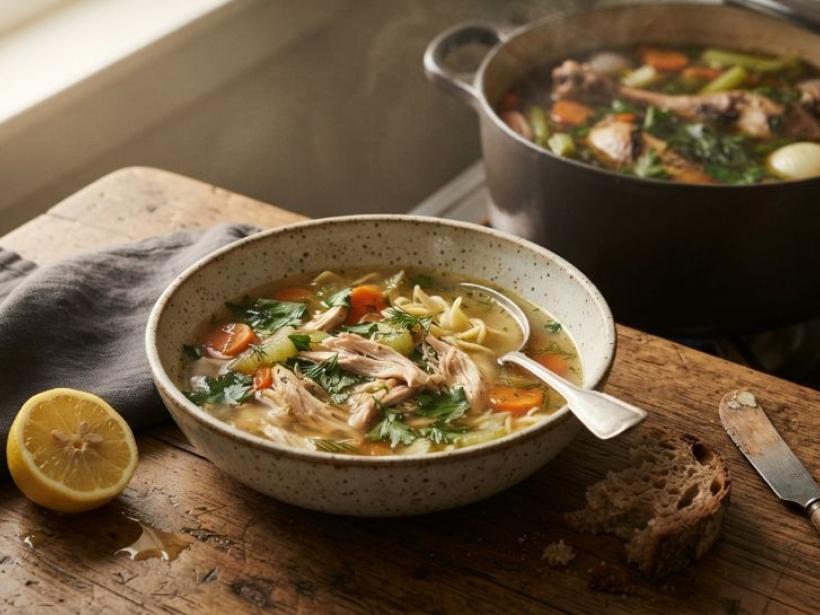

A good recipe for chicken bone broth soup starts one step earlier than most soup recipes. First, you simmer chicken bones for at least eight hours, until the liquid tastes rich and sets like jelly in the fridge. Then you turn that broth into a bowl of soup with carrots, celery, tender chicken and a squeeze of lemon. The broth takes patience, but you barely touch it for most of that time.
This bone broth soup recipe suits beginners who have never strained a stockpot. It also gives experienced cooks a few things to play with, like roasting the bones or adding chicken feet for body. Short on time? Store-bought bone broth works fine, and the soup still comes together in about 35 minutes.
Active Time: 50 minutes
Total Time: 9 hours 45 minutes
Servings: 6
Ingredients
You'll need two sets of ingredients: one for the broth and one for the soup. The broth makes roughly 10 to 12 cups, depending on how much water evaporates. The soup uses 8 cups, so you can freeze the rest for next time.
For the chicken bone broth
- 3 to 4 lb chicken bones (backs, necks and wings, or 2 leftover roast chicken carcasses)
- 2 to 4 chicken feet (optional, for a firmer gel)
- 1 onion, halved, skin on
- 2 carrots and 2 celery stalks, cut in chunks
- 3 garlic cloves, smashed
- 1 bay leaf and 1 teaspoon black peppercorns
- 1 tablespoon apple cider vinegar (optional)
- About 4 quarts cold water
For the soup
- 1 tablespoon olive oil
- 1 medium onion, diced
- 2 carrots, sliced
- 2 celery stalks, sliced
- 2 garlic cloves, minced
- 8 cups chicken bone broth
- 10 oz (about 2 cups) cooked, shredded chicken thigh meat
- ½ teaspoon dried thyme and ½ teaspoon black pepper
- Salt, to taste
- Juice of ½ lemon
- Fresh parsley or dill, to serve
- 2 cups cooked egg noodles or rice (optional)
Instructions
The method has three stages. You prepare the bones, cook the broth and then the soup, and finally serve and store it. Each stage below answers the question cooks most often ask at that point.
Preparation
Should you roast the bones first?
Roasting is optional, but it changes the flavor. Spread raw bones on a sheet pan and roast them at 400°F for 30 to 40 minutes, until they turn deep golden. As a result, the broth tastes darker and more savory, a bit like gravy.
Skip roasting if you want a lighter, clearer broth for delicate soups. Leftover roast chicken carcasses have already browned in the oven, so they can go straight into the pot. Either way, scrape up any browned bits on the pan with a splash of water and add them to the pot too.
How much water do you need?
Put the bones, feet, vegetables, garlic, bay leaf and peppercorns in a large stockpot, then add the vinegar if you're using it. Next, pour in enough cold water to cover everything by about an inch.
Don't overfill the pot. Extra water dilutes the gelatin, and that's the most common reason homemade broth stays runny. Starting with cold water also helps the proteins come up slowly, which makes skimming easier.
Cooking
How long should bone broth simmer?
Bring the pot up over medium heat until small bubbles appear. After that, lower the heat so the surface barely trembles. During the first 30 minutes, skim off the gray foam that rises.
Aim for at least eight hours. A 2017 study in Food & Nutrition Research found that cooking bones for more than 8 hours pulled out significantly more calcium and magnesium than shorter times. Many cooks go to 12 hours, and some go to 24.
Meanwhile, check the pot every few hours. Add hot water if the bones start to peek above the surface, but no more than you need to keep them covered.
Straining and cooling safely
When the broth tastes rich, pour it through a fine-mesh sieve into a large bowl and throw away the solids. Then cool it quickly.
Food safety guidance from the USDA says to refrigerate cooked food within two hours. A full stockpot takes a long time to cool, though. To speed things up, divide the broth into shallow containers no more than 3 inches deep, or set the bowl in an ice bath in the sink. You don't need to wait for it to reach room temperature. The USDA says leftovers can go into the fridge even while they're still steaming.
The next morning, lift off the solid fat on top if you want a leaner soup.
Building the soup
Now the quick part begins. Heat the olive oil in a large pot over medium heat. Add the onion, carrots and celery, then stir for 5 to 7 minutes, until they soften. Next, add the garlic and cook for one more minute, just until it smells fragrant.
Pour in the 8 cups of broth, then stir in the thyme and pepper. Bring everything to a gentle simmer and add the shredded chicken. Give it about 5 minutes to heat through.
Starting with raw boneless thighs instead? Simmer them whole in the broth for 20 to 25 minutes, until the thickest piece reaches 165°F. Then lift them out, shred them with two forks, and return the meat to the pot.
Finally, squeeze in the lemon juice and taste for salt. Homemade broth has no salt, so it usually needs a good pinch. Store-bought broth often needs little or none.
Serving
What goes best with bone broth soup?
Ladle the soup into warm bowls and scatter parsley or dill on top. Crusty bread and a simple green salad both go well with it.
Cook noodles or rice separately and add a scoop to each bowl, as Mary's Nest recommends. Otherwise, the starch soaks up the broth overnight and turns soft. In fact, keeping them apart also makes the leftovers easier to freeze.
How to store and reheat leftovers
Refrigerated soup stays good for 3 to 4 days, according to USDA guidance. For longer storage, freeze it. Soups keep their best quality for about 2 to 3 months in the freezer.
When you reheat, bring the soup to a boil. Leave some headspace in freezer containers, since the liquid expands as it freezes.
Nutritional Value Per One Serving
Homemade broth varies too much to measure without a lab, so the estimate below uses a store-bought chicken bone broth instead. I used Kitchen Basics' label as the stand-in. For the chicken, I used USDA values for roasted thigh meat. The vegetables, oil, garlic and lemon use standard USDA figures, and the estimate doesn't include salt you add yourself or optional noodles.
Here's how the math works. The whole pot comes to about 1,137 calories, and dividing by 6 servings gives roughly 190 calories each. I calculated every other line the same way.
| Nutrition Facts | One serving (about 1¾ cups) |
|---|---|
| Calories | 190 |
| Total Fat | 6 g |
| Saturated Fat | 1.5 g |
| Cholesterol | 65 mg |
| Sodium | 580 mg |
| Total Carbohydrates | 6 g |
| Dietary Fiber | 1 g |
| Sugars | 2.5 g |
| Protein | 26 g |
Figures are estimates. Your numbers will change with the broth you use, how much fat you skim, and how much salt you add.
What about the health claims?
Plenty of recipes call bone broth a superfood. The research is more modest.
- Collagen. A 2019 study found that broth made to a standard recipe had significantly lower levels of collagen-building amino acids than a 20 g dose of the collagen supplements used in research.
- Minerals. The 2017 study found that calcium and magnesium in both homemade and commercial broths stayed under 5% of daily recommended levels per serving.
- Heavy metals. The same study judged the risk from lead and cadmium to be minimal, at a few micrograms per serving.
So think of this soup as a filling, high-protein meal rather than medicine. That's still a great reason to make it.
Tips and Variations
Why didn't my broth gel?
Usually there's too much water, or the bones don't have enough cartilage. Next time, add chicken feet or wings, which carry more connective tissue than backs do. Also, keep the pot at a bare simmer instead of a rolling boil. Runny broth still tastes good, though. It simply has less body.
Does vinegar really help?
A little. In the 2017 study, making the broth more acidic boosted calcium and magnesium extraction about 17 and 15 times over. Even so, the final amounts stayed small. Add a spoonful if you like the gentle tang, but don't count on your soup for calcium.
Easy variations
Once you know the base, you can take the soup in many directions:
- Ginger and greens: simmer slices of fresh ginger in the broth, then wilt spinach or bok choy into each bowl.
- Lemon-herb: double the lemon juice and stir in a big handful of chopped dill just before serving.
- Heartier bowl: add diced potatoes with the carrots and cook until tender, or serve the soup over rice.
Notes for experienced cooks
Chasing a clearer broth? Blanch the raw bones for five minutes, drain them, and then start fresh with cold water. This removes much of the scum before the long simmer.
For deeper flavor, reduce the strained broth by a quarter before you use it. Just remember that reducing also concentrates any salt, so season at the very end.
Conclusion
This recipe for bone broth soup rewards a little planning more than skill. You set the pot going on a slow Sunday, let it simmer, and end up with enough broth for several quick dinners. After that, a bowl of chicken bone broth soup takes about half an hour.
Keep your expectations honest and your food safety tight. Cool the broth quickly, eat leftovers within 3 to 4 days, and freeze the rest in shallow containers. If this bone broth recipe soup turns into a regular habit, double the broth batch. Your future self will thank you on a busy weeknight.