
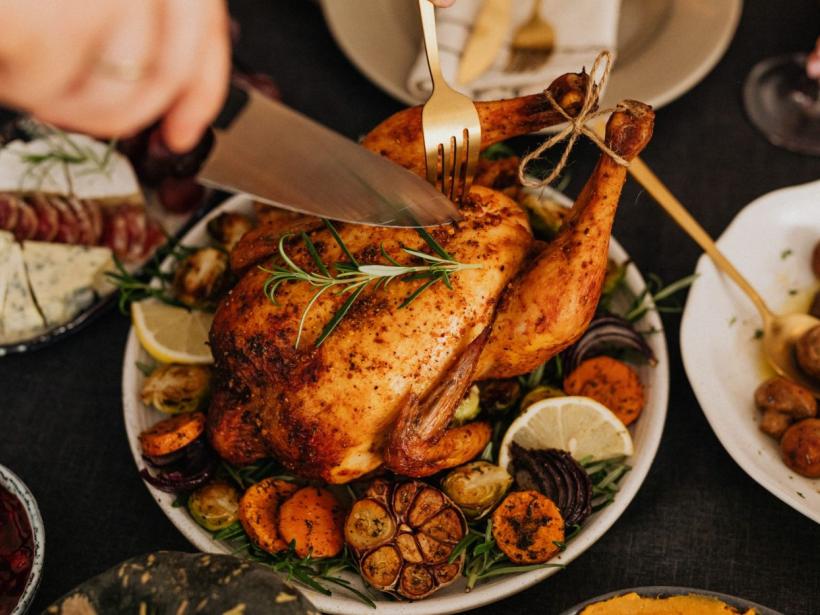
What makes this a quick, easy, and healthy dinner?
This one-pan lemon herb chicken and veggies comes together in 35 minutes from start to finish. The active prep takes about 10 minutes, and the oven does the rest while you set the table or make a quick side salad. Everything cooks on a single sheet pan, which means fewer dishes to wash and no standing over a stove.
The recipe is easy because the knife work is simple. You slice two boneless, skinless chicken breasts in half lengthwise to make four thinner cutlets that cook faster and more evenly. The vegetables need only a rough chop. Zucchini, bell peppers, and red onion all go into the same bowl with the chicken, so you season everything at once with olive oil, lemon juice, dried oregano, and minced garlic.
A healthy dinner balances lean protein, fiber-rich vegetables, and a cooking fat you can feel good about. Chicken breast delivers protein without much saturated fat. The mix of zucchini and peppers adds vitamin C and fiber. Extra-virgin olive oil brings heart-healthy monounsaturated fat and helps the herbs stick to every piece. There is no cream, no breading, and no sugary glaze, just whole ingredients that taste bright and fresh.
Ingredients for one-pan lemon herb chicken and veggies

Everything fits on one sheet pan and cooks together in about half an hour. The ingredient list uses pantry staples and vegetables that need only a quick chop, so you spend less time prepping and more time eating.
- 1 1/2 lb (680 g) boneless, skinless chicken thighs, trimmed of excess fat
- 2 medium zucchini, cut into 1-inch half-moons (about 3 cups / 360 g)
- 2 cups (300 g) cherry tomatoes, left whole
- 3 tbsp (45 ml) olive oil, divided
- 2 tsp dried oregano
- 1 tsp garlic powder
- 1 lemon, zested and juiced
Chicken thighs stay juicier than breasts at high heat and are harder to overcook, so they are a forgiving choice for a busy weeknight. The zucchini and tomatoes roast in the same pan, soaking up the lemony drippings from the chicken.
Step-by-step instructions

Preheat your oven to 425°F (220°C) and line a large rimmed baking sheet with parchment paper. A hot oven is essential here: it lets the vegetables brown while the chicken cooks through quickly, so the breast meat stays juicy.
Toss the vegetables first to give them a head start on softening. In a large bowl, combine the broccoli florets, bell pepper strips, and red onion wedges with 1 tablespoon of olive oil and a pinch of salt. Spread them in an even layer on the prepared baking sheet.
Nestle the chicken breasts among the vegetables on the same sheet. Spoon the lemon herb mixture evenly over the top of each breast, letting a little drip down the sides. Roast for 22 to 25 minutes, turning the pan halfway through. The dish is ready when the vegetables are tender and an instant-read thermometer inserted into the thickest part of a chicken breast registers 165°F (74°C).
- Preheat the oven to 425°F (220°C) and line a rimmed baking sheet with parchment paper.
- Toss the broccoli, bell pepper, and red onion with 1 tablespoon of olive oil and a pinch of salt, then spread them on the sheet.
- Place the chicken breasts among the vegetables and spoon the lemon herb mixture evenly over each one.
- Roast for 22 to 25 minutes, turning the pan once halfway through cooking.
- Check that the chicken reaches an internal temperature of 165°F (74°C) before removing the pan from the oven.
- Let the dish rest on the sheet for 5 minutes so the juices settle before serving.
Tips and easy substitutions

Use whatever vegetables look fresh at the market. Broccoli florets, trimmed green beans, or thick slices of zucchini all work well and cook in roughly the same 20 to 25 minutes. Cut any vegetable into pieces about the size of a chicken thigh so everything finishes at the same time. Dense root vegetables like sweet potato or carrot need to be sliced thinner, about a quarter inch, or they will still be firm when the chicken is done.
Boneless skinless chicken breasts work in place of thighs, but they dry out faster. Pound them to an even half-inch thickness and check for doneness 5 minutes earlier, at the 15-minute mark. For a vegetarian version, swap the chicken for a 15-ounce can of chickpeas, drained and patted dry. Toss them in the same seasoning and roast for 18 to 22 minutes until the edges are crisp.
Fresh thyme and rosemary give the dish an earthy backbone, but dried herbs do the job on a busy weeknight. Use one teaspoon of dried thyme or oregano in place of the fresh sprigs. The lemon is non-negotiable for brightness, but a tablespoon of red wine vinegar stirred in right before serving adds a different sharpness that cuts through the richness of the chicken.
How to store and reheat leftovers
Let the chicken and vegetables cool to room temperature for no more than two hours before you pack them away. Divide the meal into shallow, airtight glass containers so it chills quickly and evenly. Refrigerated leftovers stay good for up to three days.
For longer storage, use freezer-safe containers or heavy-duty zip-top bags with the air pressed out. Label the bag with the date and freeze for up to two months. Thaw overnight in the fridge when you are ready to eat.
Reheating in a 350°F (175°C) oven or an air fryer brings back the best texture. Spread everything in a single layer on a sheet pan and warm it for 8 to 10 minutes, until the chicken is hot in the center. Skip the microwave if you can; it makes the zucchini and peppers soft and watery.
Frequently asked questions
Can I use frozen vegetables for this recipe?
Yes, you can. Spread frozen broccoli or green beans directly on the pan without thawing. They will release more moisture, so increase the roasting time by about 5 minutes and check for your preferred tenderness.
What can I serve with this one-pan dinner?
The dish is a complete meal on its own, but a quick side of couscous, quinoa, or crusty bread works well to soak up the lemony pan juices. Cook the grain while the sheet pan is in the oven to keep the total time under 40 minutes.
How do I know when the chicken is fully cooked?
The most reliable method is an instant-read thermometer inserted into the thickest part of the breast. It should read 165°F (74°C). If you do not have a thermometer, slice into the thickest piece; the juices should run clear and the meat should be white all the way through, with no pink.
Photo: kaboompics.com, Pexels (Pexels License)