
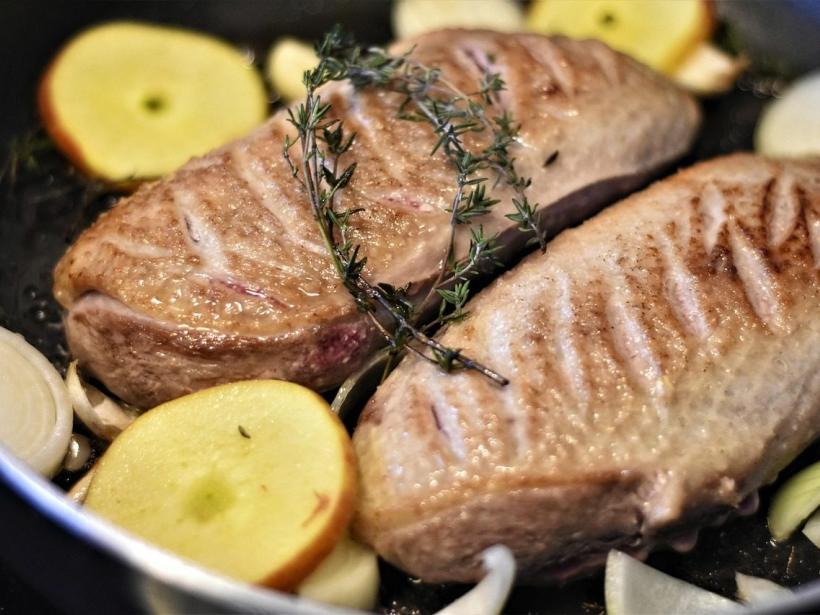
What you need for this easy chicken breast dinner
A short list of pantry staples brings this dinner together fast. The ingredients are simple and the quantities are scaled for four servings.
- 4 boneless, skinless chicken breasts (about 6 oz / 170 g each), brought to room temperature for 20 minutes before cooking
- 2 tablespoons olive oil (30 ml)
- 2 tablespoons unsalted butter (28 g)
- 3 garlic cloves, minced
- 1 teaspoon dried Italian seasoning or dried thyme
- 1 teaspoon kosher salt and 1/2 teaspoon freshly ground black pepper
Let the chicken sit on the counter while you prep the garlic and measure the spices. This lets the meat lose its deep chill. Chicken closer to room temperature cooks more evenly and is less likely to seize up in a hot pan. Pat the breasts completely dry with paper towels right before seasoning so the salt and pepper stick and the surface browns instead of steaming.
How to cook chicken breast so it stays juicy

Start by patting the chicken breasts completely dry with paper towels. Any surface moisture steams the meat instead of searing it, and steam is the enemy of a golden crust. Place each breast between two sheets of plastic wrap or parchment paper and pound the thickest part gently with a rolling pin or the flat side of a meat mallet until the whole piece is an even ¾ inch (2 cm) thick. Even thickness lets every part finish cooking at the same moment, so the thin end does not dry out while the center is still raw.
Season both sides generously with kosher salt and black pepper. Set a heavy skillet, stainless steel or cast iron, over medium-high heat and add 1 tablespoon of olive oil. When the oil shimmers and flows easily across the pan, lay the chicken breasts in gently, presentation side down. Do not move them for 5 minutes. A deep golden crust forms during that uninterrupted contact. The meat releases naturally when it is ready to flip. If you try to lift it early, the crust will tear and stick.
Flip the breasts and immediately add 1 tablespoon of unsalted butter, two smashed garlic cloves, and a few sprigs of fresh thyme or rosemary to the pan. Once the butter melts and foams, tilt the pan slightly so the butter pools at the lower edge. Use a large spoon to scoop the hot butter continuously over the top of the chicken for 2 to 3 minutes. Basting finishes cooking the second side gently and pushes the internal temperature to 160°F (71°C) on an instant-read thermometer. Transfer the chicken to a cutting board, tent it loosely with foil, and let it rest for 5 minutes. The temperature climbs to the safe 165°F (74°C), and the juices settle back into the meat instead of spilling onto the board when you slice.
Why pounding the chicken matters
A chicken breast is naturally uneven: one end is thick, the other tapers to a thin edge. If you put it in the pan as is, the thin end overcooks and dries out long before the thick center reaches 165°F (74°C). Pounding creates a uniform thickness so every part finishes cooking at the same time.
You do not need a meat mallet. Place the breast between two sheets of plastic wrap or inside a zip-top bag. Use a rolling pin or the flat bottom of a small heavy pan and gently pound the thickest part with even, glancing strokes. Work from the center outward until the whole piece is an even half inch (12 mm) thick. The plastic wrap keeps raw juices from splashing across your counter.
Even thickness also helps the seasoning penetrate more evenly and gives you a better sear because the whole surface hits the hot pan. For two small chicken breasts totaling about 12 ounces (340 g), pounding takes under two minutes and is the difference between a juicy dinner and a chewy one.
Simple swaps and add ins

The beauty of a basic skillet chicken breast is how easily you can change the flavor with what you already have. If the recipe calls for dried rosemary and you only have dried thyme, use the same amount. The herb changes but the method stays the same, so the timing does not change.
For the basting step, olive oil works in place of butter. Spoon the hot oil over the chicken just as you would melted butter. The crust will be a little less brown, so add the oil a minute earlier to give the surface more time to color.
A quick pan sauce turns the browned bits in the skillet into a spoonable sauce. Once the chicken rests, keep the pan over medium heat and try one of these:
- Pour in 1/3 cup (80 ml) chicken stock and scrape the bottom with a wooden spoon. Let it bubble for 2 minutes, then swirl in a teaspoon of cold butter off the heat.
- Squeeze the juice of half a lemon into the pan and add a tablespoon of capers with a splash of their brine. Simmer for 1 minute.
- Add 1/4 cup (60 ml) heavy cream and a pinch of dried tarragon. Stir until the sauce thickens slightly, about 90 seconds.
- Stir in a teaspoon of Dijon mustard and 2 tablespoons of water. Whisk until smooth and pour over the sliced chicken.
- Drop in a small handful of halved cherry tomatoes and cook just until they soften and release some juice, about 2 minutes.
What to serve with pan seared chicken breast

Pan seared chicken breast pairs well with sides that cook quickly while the meat rests. A simple green salad with a lemon vinaigrette takes under five minutes. Toss mixed greens with olive oil, fresh lemon juice, a pinch of salt, and black pepper right before serving.
Steamed green beans are another fast option. Trim the ends, place the beans in a steamer basket over simmering water, and cook for 3 to 4 minutes until bright green and tender crisp. Finish with a pat of butter and a light sprinkle of flaky salt. Buttered egg noodles cook in about the same time as the chicken rests. Boil wide egg noodles according to the package directions, drain, and toss with salted butter and chopped fresh parsley.
For a heartier plate, mashed potatoes work well because you can start the potatoes before the chicken. Roasted broccoli florets at 425 degrees Fahrenheit take about 12 minutes in the oven, so slide them in when you begin searing the breasts. A quick pan sauce made from the browned bits left in the skillet also ties the whole plate together without extra effort.
How to store and reheat leftovers
Let the cooked chicken breasts cool to room temperature before you pack them away, but do not leave them out longer than two hours. Place them in an airtight container and refrigerate for up to three days. Stack the pieces flat with a small piece of parchment paper between them so they do not stick together.
Reheating gently is the secret to keeping the meat moist. Put a covered skillet over low heat, add the chicken and a splash of water or broth, then warm it for 3 to 4 minutes until heated through. A microwave works in a pinch, but use 50 percent power and check every 30 seconds to avoid overcooking the edges.
Frequently asked questions
How long should I cook chicken breast on the stove?
Cook the chicken for about 5 to 6 minutes on the first side without moving it, until it releases easily and is deep golden brown. Flip and cook for another 4 to 5 minutes, then add butter and aromatics and baste for 1 to 2 minutes, until the internal temperature reaches 165°F (74°C).
Can I use frozen chicken breast for this recipe?
Thaw the chicken completely in the fridge overnight before cooking. Starting with cold or partially frozen meat makes it nearly impossible to get an even sear and a juicy center, because the outside will overcook while the inside comes up to temperature.
My chicken breast always turns out dry. What am I doing wrong?
Two things usually cause dryness: uneven thickness and overcooking. Pound the breast to an even thickness so it cooks uniformly, and pull it off the heat the moment it reaches 165°F (74°C) in the thickest part. Letting it rest for five minutes before slicing also helps the juices settle back into the meat.
Do I need a meat thermometer?
A meat thermometer is the most reliable way to hit the exact doneness without cutting into the chicken and losing juices. An instant read digital thermometer costs little and takes the guesswork out of the process.
Photo: RitaE, Pixabay (Pixabay Content License)