
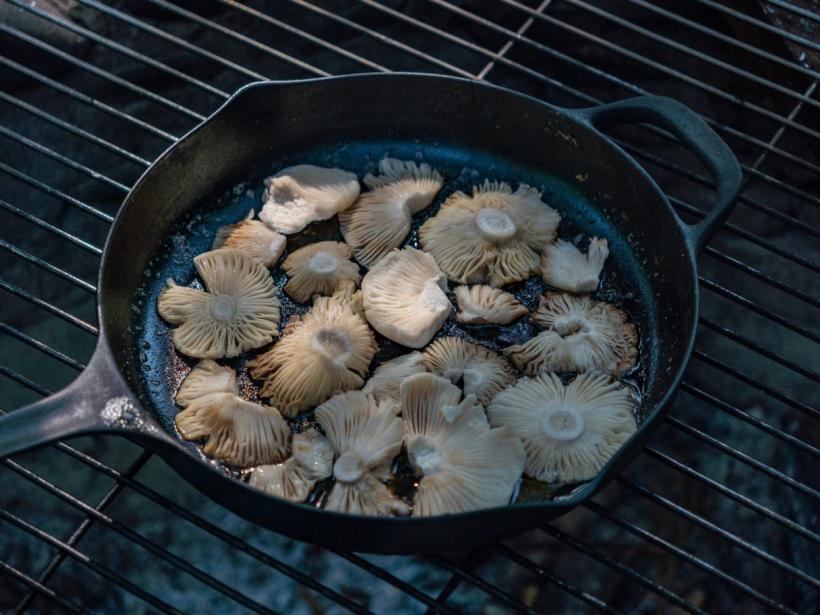
Is it safe to reheat cooked mushrooms?
Yes. Reheating cooked mushrooms is safe as long as you cooked them thoroughly the first time and chilled the leftovers within 2 hours. The real risk is bacterial growth during slow cooling, not anything the mushrooms themselves release.
Raw mushrooms have fragile cell walls that cooking breaks down, which is why they turn soft and release water in the pan. Once those walls are broken, the flesh holds moisture and protein that bacteria like, so the dish becomes as perishable as any cooked meat or gravy. Dietitians and public health agencies treat reheated mushrooms like reheated rice or chicken: cool fast, refrigerate promptly, reheat once.
Cool leftovers in a shallow container so they drop below 40°F (4°C) quickly, then refrigerate. Eat them within 3-4 days and reheat only the portion you plan to finish.
Where does the toxicity myth come from?

The myth is a garbled version of a real fact. Raw button and cremini mushrooms contain small amounts of agaritine, a compound that heat breaks down during cooking. Once the mushrooms are cooked through, the levels are low enough that nutritionists treat the dish as ordinary food, including the next day.
Shop-bought button and cremini mushrooms are cultivated indoors on pasteurised compost, not gathered wild. Food writers and dietitians say the same thing: the danger was never the reheating but the storage. A cooked mushroom dish left out on the counter for hours is a genuine risk for anyone.
- Agaritine sits in raw mushrooms and heat reduces it during cooking.
- Cultivated mushrooms from a shop are not the wild kind the old warnings described.
- Cool quickly, refrigerate within 2 hours, and eat within 3 to 4 days.
- Reheat once, until steaming hot all the way through.
How should you store mushroom dishes before reheating?
Cool cooked mushrooms within 2 hours of cooking, then refrigerate them at 4 C (40 F) or below. A warm pot left on the counter sits in the temperature range where bacteria multiply fastest, and that window is where most reheating problems begin.
Spread the dish into a shallow container so it cools evenly instead of staying hot in the middle. Keep the container loosely covered until the steam escapes, then seal it. Eat the dish within 3-4 days, and write the cooking date on the lid so you never have to guess.
- Cool the dish within 2 hours of cooking, not overnight on the stove.
- Use a wide, shallow container so the food cools through quickly.
- Set the fridge to 4 C (40 F) or below and check it with a thermometer.
- Keep the dish no longer than 3-4 days before reheating.
- Label the container with the date you cooked it.
- Store the sauce and the mushrooms together so they reheat evenly.
How do you reheat mushrooms without making them rubbery?

Mushrooms turn rubbery when they lose water fast over high heat, so reheat them gently and add back a little moisture. The skillet gives the best texture: warm a nonstick pan over medium heat, add the mushrooms with a splash of water or stock, cover, and cook for 4-6 minutes, stirring once or twice.
The oven works well for a whole tray of roasted mushrooms. Spread them in a single layer, add 1-2 tbsp (15-30 ml) of stock or water, cover with foil, and heat at 180 C (350 F) for 10-12 minutes. For a single portion, microwave in 30-second bursts, stirring between each, and stop as soon as they are hot through.
- Reheat only once. Cooled leftovers that were already warmed should be thrown out, not heated again.
- Keep the lid on in the skillet so steam, not dry heat, does the work.
- Skip a hard boil or a hot broiler, which squeezes out the water and leaves a spongy bite.
- Add fresh herbs or a knob of butter after heating, not before, so they stay bright.
Which mushroom dishes reheat well and which do not?
Stews, soups and cream sauces survive reheating because the mushrooms sit in liquid that keeps them from drying out. Dry-cooked dishes and raw mushroom salads do not: the first turn leathery in the microwave, the second go limp and watery within an hour of dressing. Texture decides the outcome here, not safety.
- Mushroom stew or stroganoff: reheats well, and the flavor often deepens overnight.
- Cream of mushroom soup: reheats well, though a splash of stock or milk restores the consistency.
- Stuffed caps: reheat whole, covered, at 325°F (165°C) for 15-20 minutes so the filling stays moist.
- Raw mushroom salads: eat fresh, since sliced raw mushrooms release water and soften fast.
- Dry-sauteed or roasted mushrooms: reheat in a hot skillet with a little butter or oil, never in the microwave.
Portion only what you plan to eat. A dish reheated twice loses more texture each time, and the second round is where mushrooms turn to rubber.
When should you throw the dish out instead?

Throw the dish out if it smells sour or of ammonia, feels slimy, shows any mould, or sat out at room temperature overnight. Reheating does not fix these problems: it kills live bacteria but leaves the toxins they produced, and those survive a full boil.
Reheat a mushroom dish only once. Every extra cycle puts the dish back in the danger zone between 40°F and 140°F (4°C and 60°C), where bacteria multiply fastest. If you already warmed the whole pan and did not finish it, let it cool within two hours, refrigerate, and eat it cold or in a fresh dish rather than heating it a third time.
Check the container, not just the food. Condensation, a cloudy film, or a swollen lid points to spoilage, and the same goes for a dish forgotten in a switched-off oven. When in doubt, bin it. One lost portion costs less than a night of food poisoning.
What easy swaps keep reheated mushrooms tasting fresh?
A squeeze of lemon or a handful of chopped parsley added after reheating does more for flavour than extra salt ever will. Heat dulls the bright notes in a dish, so add them back at the end, once the pan is off the heat.
Finish with a knob of butter or a spoonful of cream and stir it through until it melts. If a sauce has thickened in the fridge, loosen it with hot stock rather than water, which thins the texture and washes out the savoury depth.
- Stir in chopped parsley, chives or dill just before serving.
- Grate lemon zest over the top to lift a heavy sauce.
- Swirl in butter or cream off the heat for a silkier finish.
- Use hot stock, not water, to thin a sauce that has set.
- Cook mushrooms separately and fold them in just before serving.
Frequently asked questions
Can you reheat mushrooms the next day?
Yes. Cooked mushrooms kept in the fridge at 4 C or below can be reheated the next day and for up to 3-4 days after cooking. Reheat them once, until steaming hot all the way through.
Are reheated mushrooms toxic?
No. The idea that reheated mushrooms turn toxic comes from raw mushrooms spoiling quickly and containing small amounts of agaritine, which heat reduces. Proper cooking, fast chilling and cold storage are what keep the dish safe.
Can you reheat mushrooms in the microwave?
Yes. Cover the dish and heat in 30-second bursts, stirring between each one, until it is steaming hot throughout. Microwaving works best for soups, stews and cream sauces, not dry sauteed mushrooms.
Can you freeze and reheat mushroom dishes?
Yes, most cooked mushroom dishes freeze well for up to 2 months. Cool them quickly, freeze in portions, thaw overnight in the fridge and reheat once until piping hot. Raw mushrooms do not freeze well because they turn soft.
Photo: Michał Robak, Pexels (Pexels License)