
Why does pasta stick together in the pot?
Pasta sticks because its surface releases starch into the cooking water, and that starch turns into a glue when pieces sit still against each other. Give the pasta room and keep the water moving, and the starch washes away instead of binding.
Three things cause almost every sticky pot. Too little water means the starch concentrates fast, so use at least 4 quarts (about 4 liters) for every pound (450 g) of pasta. Skipping the stir in the first 2 minutes lets pieces fuse before the surface sets. Overcrowding does the same thing, because pasta needs space to swim, not stack.
Oil does not help here. A slick of oil floats on top, and any that clings to the pasta keeps sauce from gripping later. A chef's rule is simple: stir early, salt generously, and save a cup of the starchy water for the sauce.
How much water and salt do you need?

Use about 4 quarts (3.8 L) of water for every 1 lb (450 g) of dried pasta, and add 1 to 1.5 tbsp of salt once the water boils. That much water keeps the strands moving so they cannot settle against each other, and it keeps the temperature steady when the pasta goes in. A small pot crowded with pasta drops below a boil and turns gummy.
Salt does two things. It seasons the pasta from the inside, which no sauce can do afterwards, and it slightly firms the surface so pieces slide rather than grab. Add it after the boil, not before, so it dissolves fast and does not pit the pot.
- Weigh the pasta rather than guessing from the box.
- Bring the water to a rolling boil before you salt it.
- Stir for the first 30 seconds to separate the pieces.
- Keep the pot uncovered and at a steady boil.
What are the steps for pasta that never sticks?
Start with a large pot of water at a full rolling boil, meaning big bubbles break the surface across the whole pot, not just a few lazy ones at the edge. Add the salt now, about 1 tablespoon per 4 quarts (3.8 L) of water, and stir until it dissolves. A full boil keeps the pieces moving, so they never settle into a still layer where starch can glue them together.
Then follow this order and don't skip the early stirring:
- Slide the pasta in and stir gently with a long spoon for the first 2 minutes, reaching the bottom so nothing sits flat on the pot.
- Stir again for about 15 seconds every 2-3 minutes until the pasta is done.
- Before draining, scoop out 1 cup (240 ml) of the cloudy cooking water and set it aside.
- Pour into a colander and drain without rinsing, since the surface starch helps sauce cling.
- Toss the drained pasta with sauce right away, adding a splash of the reserved water if it looks tight.
Does adding oil to the water stop sticking?

No. Oil poured into the pot floats on the surface and never reaches the pasta below, so it does nothing to keep the strands apart. What it does reach is the drained pasta, where it forms a slick film that makes tomato sauce slide right off. Save the oil for the pan or the dressing.
Sticking comes from starch, not from a missing ingredient. As pasta boils, it releases starch that turns the water cloudy and glues pieces together when they sit still. Enough water, a stir right after the pasta goes in, and another stir two minutes later will keep the pieces apart.
- Use at least 4 quarts (about 4 liters) of water for every 1 pound (450 g) of pasta.
- Add 1 to 2 tablespoons of salt once the water boils, before the pasta goes in.
- Stir within the first 30 seconds, then again at the 2-minute mark.
- Keep the water at a steady boil and do not crowd the pot.
A splash of oil in the serving bowl is fine, but toss it in after draining, not into the cooking water.
How do you fix pasta that has already stuck?

Work fast, within the first minute or two, while the strands are still warm and soft. Lift the clump out with tongs and drop it back into the pot, or into a bowl with a ladle of the hot cooking water. The starch on the surface is what glued the pieces together, and hot water loosens it again.
Add 2-3 tbsp (30-45 ml) of the cooking water per serving and toss gently with tongs or a fork for 20-30 seconds. Pull the pieces apart from the ends rather than tugging at the middle, which tears long shapes like fettuccine. Work through the clump in small sections instead of wrestling the whole batch at once.
If the pasta has cooled and the clump feels firm, the starch has set and the pieces will break before they separate. Toss it with a little sauce or olive oil and serve it as it is. Slightly tangled pasta tastes the same, and a short shape like penne or rigatoni hides the tangle better than spaghetti does.
How do you keep cooked pasta from sticking later?
Toss drained pasta with a tablespoon of its cooking water or a little sauce the moment it leaves the pot, then spread it on a tray so it cools fast. Pasta clumps when hot strands sit in a pile, so give them space and move them within the first minute.
For the fridge, cool the pasta within 30 minutes, pack it in a shallow container and use it within 3 days. Reheat in a pan with a splash of water over medium heat for 2-3 minutes, stirring once.
- Add 1 tbsp (15 ml) olive oil only if the pasta will be eaten cold.
- Keep sauce separate until serving so the pasta does not go soft.
- Cover leftovers tightly so they do not dry out at the edges.
- Reheat portions, not the whole batch, so nothing cools twice.
Frequently asked questions
Should you rinse pasta after draining?
No. Rinsing washes off the surface starch that helps sauce cling to the pasta. Drain it well and toss it with sauce right away, or with a small drizzle of oil if it will wait.
How much salt should go into the pasta water?
Use about 1 to 1.5 tablespoons of salt for 4 quarts (3.8 L) of water. The water should taste lightly seasoned, like a light broth, not like seawater. Add the salt once the water boils, before the pasta goes in.
Can you cook pasta in less water?
Yes. You need to stir more often because the starch is more concentrated. Use at least 2 quarts (1.9 L) of water per 1 lb (450 g) of pasta and keep the pot at a gentle boil so it does not foam over.
Why does pasta stick after it is drained?
Starch on the surface sets as the pasta cools, and pieces pressed together stick. Toss drained pasta with sauce or a little oil within a minute, and reheat leftovers with a splash of hot water to loosen them.
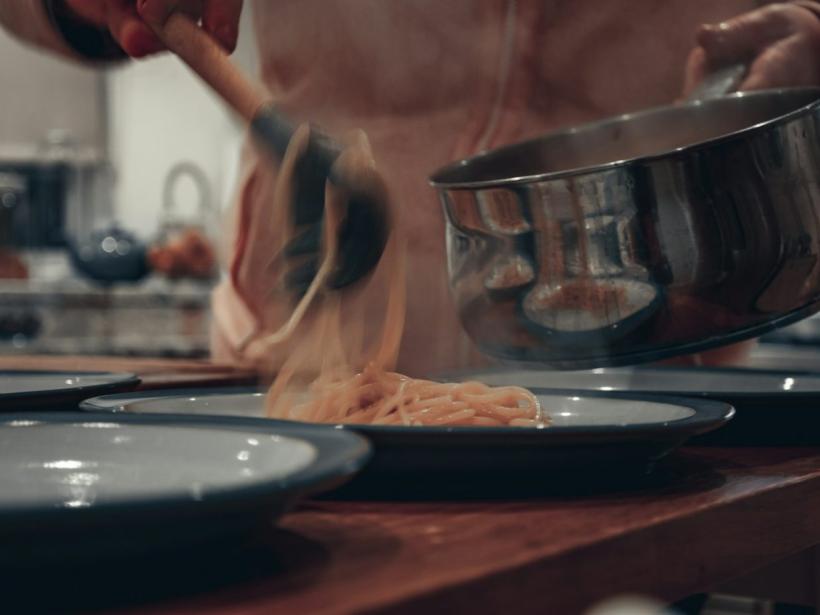
Photo: Joseph Sharp, Unsplash (Unsplash License)