
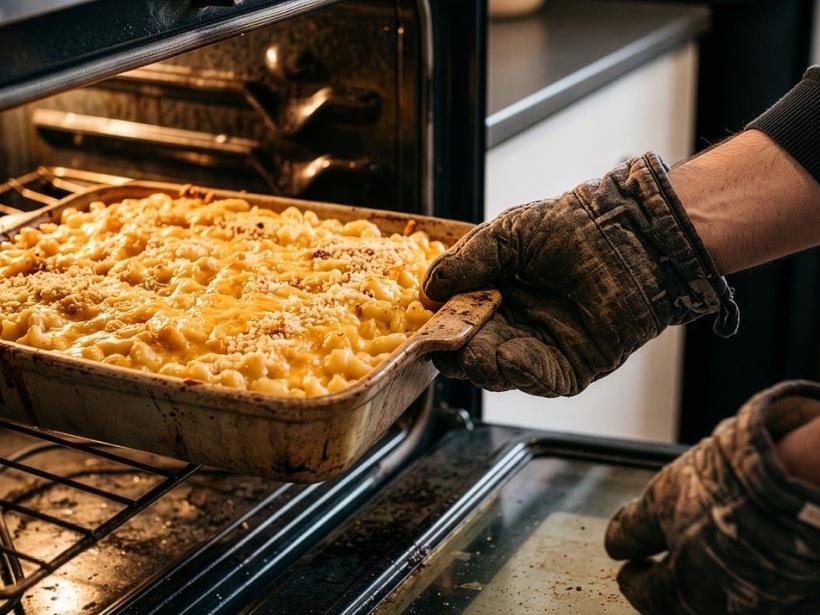
Why does the pasta shape matter in a casserole?
The shape of the pasta determines how well the sauce clings to every bite and whether the dish holds its texture after 30 to 45 minutes in the oven. A smooth, flat noodle lets the sauce slide right off, leaving you with a dry top layer and a soupy bottom. Shapes with ridges, deep curves, or hollow centers trap the sauce inside and around the pasta, so each forkful tastes balanced from the first serving to the last.
Long baking times also soften the starches in the pasta. A sturdy shape with thick walls, such as a short tube with pronounced grooves, resists turning into mush far better than a delicate ribbon or a thin spaghetti strand. That structure keeps the casserole sliceable when you scoop it onto a plate instead of collapsing into a soft pile.
With the right shape, the sauce and cheese distribute evenly through the dish. You get a creamy interior with a golden, crisp top, and the pasta underneath stays distinct rather than disappearing into the background.
Which pasta shapes work best for a baked casserole?

The best shapes have ridges, hollow centers or tight spirals that grab sauce and stay firm through the second cooking in the oven. You want a short, sturdy piece that holds its shape instead of collapsing into a soft block. Avoid long strands like spaghetti or delicate shapes that turn to mush.
These five shapes work well in a casserole.
- Penne. The angled cut and outer ridges trap sauce inside the tube and all around the outside. Penne holds its structure well, giving you a little bite even after 30 minutes in the oven.
- Rigatoni. Wider tubes with deeper grooves catch chunky sauces and melted cheese better than almost any other shape. The large opening lets the filling flow inside, so every forkful tastes rich.
- Fusilli. The tight corkscrew shape twists sauce into every fold. Fusilli stays springy and does not compact into a dense layer, which keeps the casserole light and easy to scoop.
- Ziti. A smooth, medium-length tube that bakes into neat, tender layers. Without ridges, it relies on the hollow center to carry sauce, making it ideal for baked ziti with ricotta and mozzarella.
- Cavatappi. The double spiral and hollow core create more surface area for sauce to cling to. Cavatappi holds its ridged texture even when fully baked, adding a pleasant chew to creamy casseroles.
What pasta shapes should you avoid?
Long, thin strands and very delicate shapes turn into a disappointing mush in a baked casserole. Spaghetti and angel hair cook so quickly that the oven time pushes them past al dente, leaving you with a soft, starchy mass instead of distinct pasta pieces. The sauce also slides right off their smooth surface, so you lose the contrast between the pasta and the creamy filling that makes a casserole satisfying.
Fresh lasagna sheets are another tricky choice unless you are building a traditional layered dish. They contain more moisture than dried pasta and can dissolve into the sauce rather than holding their own layer. Stick with dried pasta that has some heft and surface texture, which gives the dish structure and helps the sauce cling.
- Spaghetti: the thin, round shape offers no grip for the sauce and overcooks in minutes under the oven heat.
- Angel hair: the finest strand pasta turns to paste before the casserole is heated through.
- Fresh lasagna sheets: too much moisture makes them fall apart unless you are making a classic lasagna.
- Orzo: the tiny rice-shaped pasta sinks to the bottom and clumps into a dense layer.
- Farfalle with thin centers: the pinched middle cooks faster than the frilled edges, so you get uneven texture and breakage.
- Stuffed shells without support: jumbo shells collapse and spill their filling when baked without a thick sauce to hold them upright.
How long should you boil the pasta before baking?

Boil the pasta for 2 to 3 minutes less than the shortest time printed on the package. If the box says 10 to 12 minutes, drain it at the 7- or 8-minute mark. This half-cooked stage, sometimes called "al dente minus," gives the pasta enough structure to survive a second cooking round in the oven without turning into mush.
The pasta will keep absorbing liquid from the sauce and cheese as the casserole bakes. Starting with fully cooked noodles means they have no room left to take on moisture, so they swell past the breaking point and lose their shape. Cutting the boil short leaves the center slightly firm, and that firm core softens just enough during the 25 to 40 minutes the dish spends in a hot oven.
Rinse the drained pasta briefly under cold water to stop the carryover cooking, then toss it with a small drizzle of oil or a spoonful of your sauce. That thin coating keeps the pieces separate while you assemble the dish and prevents them from clumping together before they hit the oven.
Can you use whole wheat or gluten-free pasta in a casserole?
Whole wheat and gluten-free pastas work in a baked dish, but they behave differently than standard semolina. The extra bran in whole wheat absorbs more liquid, so the casserole can turn dry if the sauce is too thick. Gluten-free pasta made from rice, corn or a legume blend lacks the elastic protein network that holds a firm shape, making it prone to turning mushy or splitting if boiled too long before baking.
A simple adjustment gives you a good result. Par-boil the pasta for about half the time listed on the package, then drain it while it still has a firm, chalky bite at the center. Make your sauce noticeably looser than you normally would. A bechamel or tomato sauce should slide off the spoon in a thin ribbon rather than sit in a heavy dollop, because the dry pasta will pull moisture from the sauce as the casserole bakes.
Among gluten-free options, short shapes with ridges hold up better than long strands. A corn and rice blend rigatoni or fusilli keeps more texture than a single-ingredient rice penne, which can soften to a paste if overcooked by even a minute. Check the casserole five minutes before the end of the baking time and tent it with foil if the top is browning before the inside is hot through.
How do you keep the pasta from sticking together in the dish?

A casserole turns gummy when the starches on the surface of the pasta lock together before the dish sets in the oven. Create a thin barrier around each piece while the pasta is still warm and pliable. Drain the pasta a minute before the package time for al dente, then move quickly through the next steps so it does not sit in the colander and clump.
Do not rinse the pasta with cold water, which washes away the starch that helps the sauce cling. Instead, toss the drained pasta with one of these right in the pot while it is still steaming:
- Return the pasta to the pot and stir in a ladle of the warm sauce you are using for the casserole. The liquid coats the pieces and keeps them separate.
- If your sauce is not ready yet, drizzle with a teaspoon of olive oil per 4 ounces (113 g) of dry pasta and toss with tongs until every piece glistens.
- For cream-based casseroles, stir in a splash of milk or a small knob of butter. The fat seals the surface and adds richness.
- Spread the dressed pasta in your baking dish right away. A single even layer cools faster and stops the bottom pieces from steaming into a block.
- When you pour the remaining sauce over the top, wiggle the dish gently so the liquid settles between the pieces instead of sitting on the surface.
A sauce slightly looser than you would serve at the table also prevents sticking. The pasta absorbs liquid as it bakes, so a thin béchamel or a tomato sauce with an extra splash of stock gives the dish room to set without turning dry or tacky.
What is a good substitute if you don’t have the right shape?
Any short, hollow or deeply ridged pasta will work in a baked dish. Find a shape that grabs the sauce and holds its structure through a long bake, not one that turns soft or slides apart. If your recipe calls for a specific cut and the pantry is empty, swap one textured short shape for another that has a similar size and bite.
Rotini stands in neatly for fusilli. Both have tight spirals that trap bits of meat, cheese and vegetable, so the mouthfeel stays close to the original. Penne and ziti are interchangeable: the smooth or ridged tubes bake at almost the same rate and deliver that familiar forkful of sauce inside the hollow center. Shells replace cavatappi well because their curved, open bodies cradle thick sauces and small ingredients like peas or ground sausage. Plain elbow macaroni will also work. The finished casserole will taste a little more rustic, but the small curved tubes still catch enough sauce to keep it moist.
Frequently asked questions
Can I use no-boil pasta in a casserole?
Yes, but the dish needs extra liquid for the pasta to absorb as it bakes. Add about half a cup more milk or broth to the sauce, and expect a slightly softer texture than par-boiled pasta.
Should I rinse pasta after boiling for a casserole?
Skip the rinse. The starch on the surface helps the sauce cling to the pasta. The only exception is if you are making a cold pasta salad casserole, where you want to stop the cooking instantly.
How do I fix a casserole that came out too dry?
Warm a little milk, broth, or cream and drizzle it over the top. Cover with foil and return the dish to a 300°F (150°C) oven for 10 minutes to let the moisture soak in without over-baking the edges.
Can I assemble the casserole the night before?
You can, but undercook the pasta by an extra minute and let the sauce be a bit thinner than usual. The pasta will absorb liquid overnight, so a looser sauce now prevents a dry bake tomorrow.
Photo: mycuppatea, Pixabay (Pixabay Content License)