
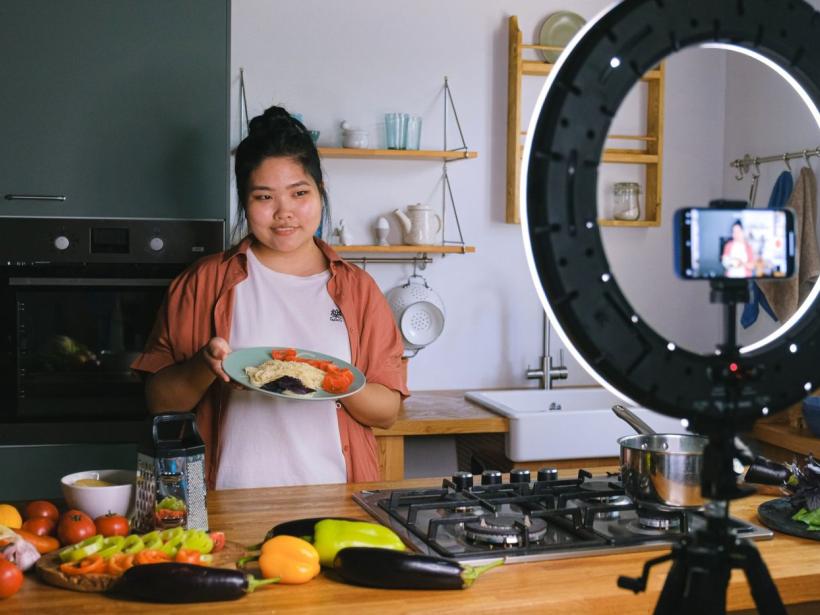
What does a food blogger's income actually consist of
Most food bloggers in Ukraine build their income from three main streams. The first is direct platform monetization, where YouTube or Facebook pay you a share of the ad revenue shown on your videos. The second is brand partnerships, where a company pays you a fixed fee to feature its product in a post or video. The third is selling your own products or services directly to the audience you built.
These three rarely appear at the same time. A new creator usually relies on platform ads alone, while a mid-size blogger often earns more from brand deals than from ads. Selling your own product, such as a spice blend or a cooking course, typically comes later when the audience trusts your recommendations.
Here is how each one works in practice:
- Platform ad revenue. YouTube places ads before or during your video and pays you roughly 55% of what the advertiser paid. The amount depends on views and viewer location.
- Direct brand deals. A food company pays you a one-time fee to create a dedicated video or post featuring their product. The fee is negotiated directly with the brand, not through the platform.
- Affiliate links. You share a unique link to a product or a service and earn a commission when someone buys through that link. This works well for kitchen tools and grocery delivery apps.
- Your own digital product. A recipe e-book or a paid video course that you sell directly. You keep all the revenue after payment processing fees.
- Your own physical product. A branded spice mix, sauce, or kitchen tool. This takes upfront investment and logistics but can become your largest income source over time.
- Consulting and services. Some bloggers offer menu planning, food photography, or social media coaching for restaurants and other food businesses.
How much can you earn from YouTube ads on a food channel

YouTube ad earnings depend on CPM, the cost an advertiser pays per thousand views. For Ukrainian food content, the CPM typically ranges from $1.50 to $4.00, lower than in the US or UK because of the local advertising market. A cooking channel with a Ukrainian audience earns less per view than one targeting viewers in higher-CPM countries.
Here is a rough monthly estimate based on subscriber count and average views. A channel with 10,000 subscribers might get 30,000 views a month. At a $2.00 CPM, that is $60 before YouTube takes its 45% cut, leaving about $33. A channel with 50,000 subscribers and 150,000 monthly views would earn around $165. A larger channel with 100,000 subscribers and 500,000 views could bring in $550 a month from ads alone.
These numbers assume a consistent upload schedule and a primarily Ukrainian audience. A worked example for a mid-size channel: 200,000 monthly views at a blended CPM of $2.50 gives $500 in gross ad revenue. YouTube keeps roughly $225, so the creator receives about $275 for that month. Real income fluctuates with seasonal ad rates and video length, because longer videos can place more ads.
How much do food bloggers earn on Instagram in Ukraine
Instagram income for food creators in Ukraine follows a tiered system based on follower count and engagement rate. A nano account with 3,000 to 10,000 followers typically charges $30 to $80 for a single sponsored post or a set of three Stories. Micro-influencers in the 15,000 to 50,000 follower range command $100 to $350 per post, provided their audience is active and comments show real interaction.
Mid-tier food bloggers with 80,000 to 200,000 followers earn $400 to $1,200 per sponsored feed post. A Story series from the same creator adds $150 to $400. Top Ukrainian food accounts above 300,000 followers operate on a different scale entirely. Their rates start at $1,500 per post and can reach $3,500 or more, especially when the content includes a recipe video filmed in their signature style. Brands pay a premium for high production value and a loyal, local audience.
- Nano (3K, 10K followers): $30, $80 per sponsored post
- Micro (15K, 50K followers): $100, $350 per post, often with one free Story frame
- Mid-tier (80K, 200K followers): $400, $1,200 per feed post, $150, $400 per Story set
- Macro (300K+ followers): $1,500, $3,500 per post, higher for video-first content
A Ukrainian food blogger who posts two paid collaborations per month at the micro-influencer level can reliably add $200 to $700 to their monthly income from Instagram alone. Accounts that mix high-quality static posts with daily Stories and Reels tend to attract repeat brand partnerships, which stabilizes earnings quarter by quarter.
How do brand deals work and what do they pay

A brand deal is a direct agreement where a company pays you to feature their product. The two common forms are barter (you get free stuff) and paid collaborations. For food bloggers in Ukraine, a paid Instagram post from a mid-level account with 20,000 to 50,000 followers typically brings $100 to $400. A YouTube integration on a channel averaging 30,000 views per video can land between $300 and $800.
Rates are often set per 1,000 followers or per 1,000 views. On Instagram, a rough benchmark is $5 to $15 per 1,000 engaged followers. On YouTube, a flat fee for a 60-second product mention inside a recipe video ranges from $15 to $30 per 1,000 views. A blogger whose audience trusts their kitchen advice and comments actively will sit at the higher end of that range.
- Barter deals give you ingredients or cookware but no cash; useful when you are starting out.
- Paid posts include a fixed fee and sometimes an affiliate commission on top.
- A dedicated YouTube video costs more than a quick Instagram Story mention.
- Long-term ambassadorships, where you post monthly for six months, pay a retainer rather than a one-off fee.
- Local Ukrainian brands often pay less than international ones entering the market.
- Rates rise when you provide your own photography and recipe development instead of reposting brand assets.
What other ways do food bloggers make money

Beyond ads and brand deals, many food bloggers build income streams they control directly. Affiliate links work well on recipe blogs and in YouTube descriptions: you recommend a pan or a knife, someone buys it, and you get a small cut, typically 3 to 8 percent of the sale. The money adds up over time as older posts keep getting traffic.
Selling digital products is another path that requires little ongoing work once the product is made. A PDF e-book with 30 tested recipes can sell for a modest price and deliver steady monthly income. Some bloggers also run small online cooking classes or offer one-on-one consulting, charging per session or per student.
Here are the most common additional income streams food bloggers use:
- Affiliate links in recipe posts and video descriptions, earning a percentage each time a reader buys a recommended tool or ingredient.
- A paid recipe e-book or a printable meal planner sold directly from the blogger’s own site or through a platform like Gumroad.
- Online cooking workshops taught live over Zoom, often in small groups of 8 to 15 people, with a set fee per participant.
- Personalized meal-planning or nutrition consulting sold as one-hour video calls or a monthly subscription.
- A paid newsletter with exclusive weekly recipes and cooking tips, using a platform like Substack or Patreon for recurring subscriptions.
- Licensing original recipes or food photos to magazines, stock sites, or food brands that need ready-to-use content.
What changes your earning potential as a food blogger
Two bloggers with the same follower count can have vastly different incomes. The gap comes down to a handful of factors that advertisers and platforms weigh more heavily than the raw subscriber number.
A channel focused on quick weeknight dinners for a Ukrainian audience will attract local grocery brands, while one making intricate French pastry in English opens the door to international kitchenware sponsors. Your niche sets the ceiling for who will pay you and how much.
- Audience location: viewers from the US, Canada and Western Europe bring 3 to 5 times higher YouTube ad rates than a mostly Ukrainian audience, simply because advertisers bid more for those markets.
- Engagement rate: a small account where followers actively comment, save and share posts is far more valuable to brands than a large, silent following. Brands track this before making an offer.
- Content format: long-form video builds deeper watch time and higher ad revenue, while short vertical clips grow reach faster but pay next to nothing from platform ads alone.
- Posting consistency: channels that upload weekly hold audience attention and keep the algorithm working in their favor. Irregular posting causes sharp dips in views and, with them, monthly income.
- Production quality: clear audio, good lighting and clean editing make your content usable for brand integrations without extra work on their side, which raises the fee you can ask for.
Frequently asked questions
Can you make a full-time living as a food blogger in Ukraine
Yes, many mid-tier and top food bloggers earn enough to work full-time. You typically need a combined audience of 30,000 to 50,000 followers across platforms and at least two income streams, such as YouTube ads and brand deals, to replace an average salary.
How many followers do you need to start earning
You can start earning with as few as 1,000 engaged followers on Instagram through small barter deals or affiliate links. Paid brand collaborations usually begin around 5,000 to 10,000 followers, while YouTube ad revenue kicks in after you join the Partner Program at 1,000 subscribers.
Do food bloggers in Ukraine earn less than those in the US or Europe
Yes, ad rates and brand budgets are lower. A Ukrainian food channel on YouTube might see a CPM of $1 to $3, while a US channel in the same niche often gets $5 to $12. Instagram sponsored posts also pay less, though working with international brands can close the gap.
Which platform pays better for food content, YouTube or Instagram
YouTube tends to provide more stable, predictable income through ad revenue once your channel grows. Instagram relies more on brand deals, which can be higher per post but are less regular. Most successful food bloggers use both platforms to balance steady income with bigger one-off payments.
Photo: Anna Shvets, Pexels (Pexels License)