
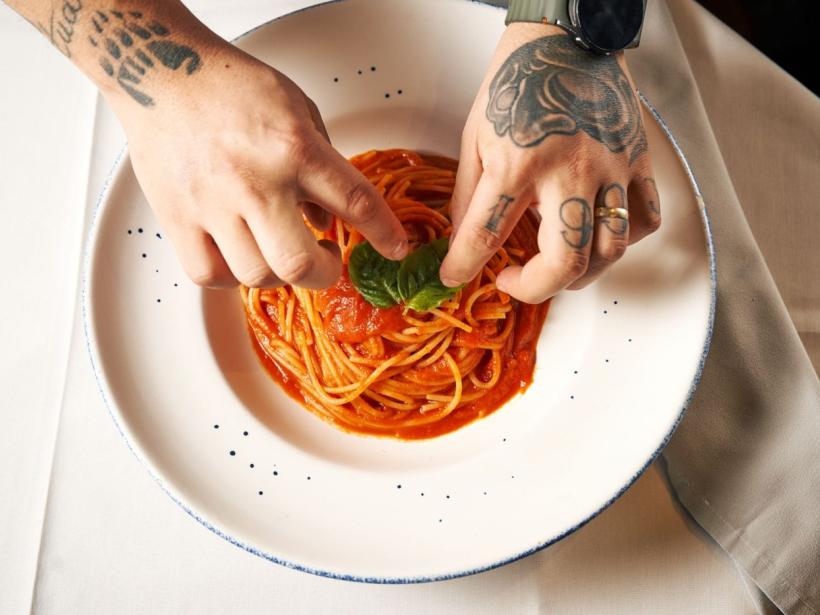
What happens when you pair the wrong pasta and sauce?
When pasta and sauce don't match, the sauce slides off and pools at the bottom of the plate. You end up eating bare noodles first and spooning up leftover liquid after. It is not a disaster, but the dish loses the balance that makes a good pasta satisfying.
Thin, delicate strands like angel hair turn clumpy and heavy under a thick ragù. The heavy sauce makes the pasta clump together instead of staying separate. A chunky sauce with big pieces of mushroom or sausage simply cannot grab onto a smooth, narrow shape like spaghetti. The solids fall to the bowl while you chase them with a fork.
You lose texture and flavor in every bite. A well-matched shape carries just enough sauce to coat each strand or piece, so you taste everything at once. Without that cling, the dish tastes bland even when the sauce itself is well seasoned. The pasta and sauce need to hold onto each other, not just sit side by side.
Which pasta shapes work best with chunky sauces?

Chunky sauces need a pasta that can catch every piece of meat, vegetable, or legume. Wide, sturdy shapes with plenty of surface area do this job best. Thin spaghetti simply lets the chunks slide off and pool at the bottom of the bowl.
Ridges and hollow centers are your best tools here. Ridges on the outside of the pasta create friction that grips the sauce, while tubes and cups trap the solid bits inside. You get a little bit of everything in each forkful, not a pile of plain pasta at the end.
These six shapes are the most reliable partners for a heavy ragù, a sausage and pepper sauce, or a chunky lentil dish:
- Rigatoni. Wide tubes with deep ridges on the outside hold meat and vegetables both inside and out.
- Pappardelle. Broad, flat ribbons give a large landing pad for slow-cooked beef or wild mushroom pieces.
- Conchiglie (shells). The deep cup shape scoops up beans, peas, and small chunks of ground meat.
- Paccheri. Very large, smooth tubes that whole cherry tomatoes or cubes of sausage can slide right into.
- Fusilli. The tight spirals trap finely chopped vegetables and crumbled sausage in every twist.
- Orecchiette. Little ear-shaped disks form a shallow bowl, perfect for catching broccoli rabe florets or crumbled Italian sausage.
What should I use for smooth, creamy sauces?
Flat, ribbon-like pasta gives creamy sauces the right surface to cling to, so every bite tastes balanced rather than heavy. Fettuccine and tagliatelle are the standard choices because their width and slight texture catch an even coat of sauce without letting it pool at the bottom of the bowl.
Linguine sits between a ribbon and a strand. Its narrow, flat shape works well with lighter cream sauces, like a lemon-cream or a thin Alfredo, where a wider noodle would feel too rich. The broad surface of all three shapes lets the sauce spread out and emulsify properly instead of sliding off, which is what happens when you pair a cream sauce with a smooth tube like penne.
- Fettuccine stands up to the heaviest cream sauces, including a classic Alfredo with butter and Parmesan.
- Tagliatelle pairs beautifully with a mushroom cream or a Bolognese bianca because the wider ribbon holds small bits of vegetable or meat.
- Linguine works for lighter cream sauces where you still want coverage without overwhelming the dish.
- Pappardelle, the widest ribbon, suits a slow-cooked cream sauce with shredded meat or a rich ragù.
- Fresh egg pasta in any ribbon shape absorbs sauce more readily than dried, giving a softer, more unified texture.
Which pasta is right for light, oil-based sauces?

Long, thin strands are the go-to for oil-based sauces. Spaghetti, angel hair, and capellini have a delicate structure that lets olive oil, garlic, and fresh herbs coat each strand without clumping. A heavy, chunky shape pools the oil at the bottom of the bowl and leaves you with dry pasta on top.
The key is surface area. Thin noodles offer just enough grip for a glossy emulsion while staying light. Angel hair and capellini are especially good with quick sauces like aglio e olio because they cook in under 3 minutes and do not overpower subtle flavors. Reserve a cup of pasta water before draining. A splash of that starchy water helps the oil cling evenly to every strand.
- Spaghetti works with classic garlic and oil, lemon zest, and red pepper flakes.
- Angel hair suits the lightest coatings, such as a drizzle of good olive oil and fresh parsley.
- Capellini pairs with seafood oils, like a quick shrimp scampi butter sauce.
- Linguine handles slightly richer oil sauces with clams or anchovies while staying nimble.
- Thin bucatini adds a hollow center that traps a little extra oil inside each strand.
Are there all-purpose shapes that work with most sauces?

A handful of shapes are flexible enough to handle everything from a quick garlic and oil to a meaty ragù. You can keep them in the pantry and never worry about a mismatch. They are reliable because of their mix of texture, structure, and surface area.
Ridges catch small bits of herbs, garlic, or ground meat. Hollow centers trap liquid so a thin sauce does not pool at the bottom of the bowl. Curves and folds create pockets that hold onto cream or tomato without turning into a stodgy lump. When a shape combines two or three of these features, it becomes a true all-rounder.
- Penne rigate. The angled cut and outer ridges grip both smooth tomato sauces and chunky vegetable mixes. The tube holds enough liquid to coat each bite evenly.
- Fusilli. The tight corkscrew shape traps pesto, cream, and small pieces of sausage equally well. It works in cold pasta salads and hot baked dishes.
- Farfalle. The pinched center stays slightly firmer while the frilled edges catch lighter sauces. It pairs with cream, tomato, or simple butter and sage.
- Rigatoni. Wider tubes with deep ridges handle heavy meat sauces and baked cheese dishes. The large hollow also suits thin, oily sauces that need a place to collect.
- Casarecce. The twisted, scroll-like shape has a groove that runs the length of each piece. It holds chunky vegetables, ricotta, or a basic marinara without slipping.
These shapes are not the absolute best for any single sauce, but they are good enough for nearly all of them. That makes them the smart choice for a weeknight when you want to use what is already in the cupboard.
How do I match filled pasta with the right sauce?
Filled pasta such as tortellini, ravioli and agnolotti already carry a concentrated flavor inside, so the sauce should support that filling rather than bury it. A heavy meat ragù or a thick, chunky tomato sauce competes with the delicate ricotta, spinach or pumpkin inside and turns the dish into a muddle. Instead, think of the sauce as a glossy coat that adds a little fat, aroma or sweetness without demanding attention.
A classic brown butter and sage sauce works because the nutty butter clings to every pleat and the crisp sage leaves match the herbal notes in the filling. For cheese-filled tortellini, a light cream sauce with a grating of Parmesan adds richness without bulk. Ravioli stuffed with mushroom or squash shine with a simple drizzle of good olive oil and a pinch of sea salt. The rule is straightforward: keep the sauce thin enough to pool on the plate, not pile on the pasta.
- Tortellini with ricotta and spinach pair well with melted butter, sage and a dusting of nutmeg.
- Meat-filled agnolotti work with a reduced beef broth or a light tomato passata, not a heavy ragù.
- Pumpkin or butternut squash ravioli need only brown butter, crushed amaretti or a few toasted hazelnuts.
- Mushroom ravioli taste best with a thyme-infused olive oil or a thin cream and shallot sauce.
- Large round ravioli with egg yolk inside demand nothing more than warm butter and black pepper.
Frequently asked questions
Can I use spaghetti with a meat sauce?
Yes, but it is not ideal. Spaghetti has a smooth, round surface that lets chunky meat and vegetables slip off. A wider, flat noodle like pappardelle or a tube shape like rigatoni catches the pieces much better.
Does fresh pasta follow the same rules as dried?
Fresh pasta is more porous and tender, so it absorbs sauce differently. It works beautifully with delicate cream and butter sauces. Dense, chunky sauces can overwhelm it, so stick to lighter pairings.
What if I only have one shape at home?
A versatile shape like penne or fusilli will do a decent job with almost any sauce. If you have a mismatch, simply chop large sauce ingredients smaller or add a splash of pasta water to help the sauce cling better.
Photo: Willians Huerta, Pexels (Pexels License)