
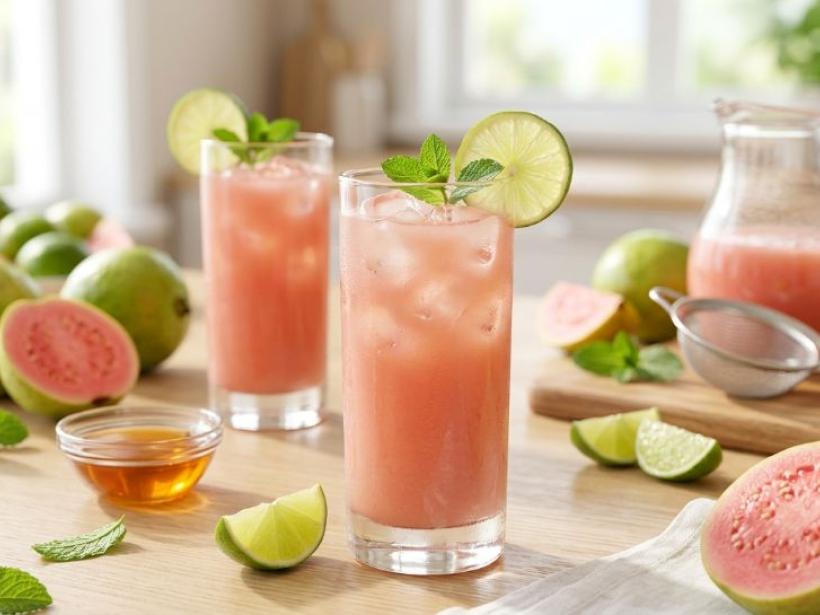

Ripe guava turns into juice faster than most fruit. The flesh is soft enough to blend without a fight, unlike, say, a mango pit or a pineapple core. This recipe for guava juice skips added sugar and lets the fruit carry the flavor, which tastes more fragrant than anything sold in a plastic bottle.
Learning how to make guava juice at home comes down to picking fruit that gives slightly under your thumb. Rock-hard guavas taste chalky no matter how long you blend them.
Active Time: 10 minutes. Total Time: 15 minutes. Servings: 2.
Ingredients
- 4 ripe guavas, chopped
- 2 cups cold water
- 1 tbsp honey or sugar (optional)
- 1 tsp lime juice
- Ice, for serving
Instructions
Preparation
Rinse the guavas and chop them into rough chunks, seeds and all. The seeds blend fine and strain out later, so there's no need to core the fruit first. Guava skin is edible and holds a lot of flavor, so leave it on unless the peel looks bruised or tough.
Cooking
Add the chopped guava and cold water to a blender. Blend on high for about a minute, until the mixture turns smooth and pale pink. Making guava juice this way keeps the pulp light instead of gritty, since the seeds break down along with everything else.
Pour the blended mixture through a fine mesh strainer set over a bowl. Press down with a spoon to push the juice through and leave the seeds and coarse pulp behind. This step takes a few minutes and it's the one most people rush, which is why store-bought guava juice tastes smoother than a first attempt at home.
Serving
Stir in the lime juice and honey, tasting as you go since guavas vary in sweetness. Pour over ice and serve right away. Homemade guava juice separates a little as it sits, so give it a quick stir before each glass.
Nutritional Value Per One Serving
Nutrition Facts, One Serving
|
Nutrient |
Amount |
|
Calories |
90 |
|
Total Fat |
0.5g |
|
Saturated Fat |
0g |
|
Cholesterol |
0mg |
|
Sodium |
3mg |
|
Total Carbohydrates |
22g |
|
Dietary Fiber |
4g |
|
Sugars |
16g |
|
Protein |
1g |
Tips and Variations
Pink guavas make a sweeter, more colorful juice than the white-fleshed kind, though both work fine here. A few other things worth knowing when preparing guava juice:
- Add a few mint leaves to the blender for a sharper, cooler finish
- Swap lime for a splash of orange juice if you want something less tart
- Freeze leftover juice in ice cube trays instead of storing it as liquid, since it separates fast in the fridge
Conclusion
Once you know how to prepare guava juice from scratch, the bottled version starts to taste flat by comparison. It takes a few extra minutes over pouring from a carton. Worth it, though, once the fruit is actually ripe and you can taste the difference in the first sip.
For more delightful sweets recipes, check out our collection.