
What do you need to make noodles by hand?
You need four things to make fresh noodles without a machine: a rolling pin, a large knife, a flat work surface, and a clean kitchen towel or sheet pan for drying. That's the whole setup, and most home kitchens already have it.
The dough comes in two simple versions. For egg noodles, whisk together 2 large eggs (about 3.5 oz / 100 g) with 1 cup (125 g) all-purpose flour. The eggs add richness and a tender bite; the ratio is roughly one egg per half cup of flour. For plain water noodles, use 1 cup (125 g) flour with 6 tbsp (90 ml) water and a generous pinch of salt. The water version is chewier and holds up well in soup.
- 1 cup (125 g) all-purpose flour, plus extra for dusting
- 2 large eggs for egg noodles, or 6 tbsp (90 ml) water for plain noodles
- A pinch of salt to season the dough
- A rolling pin, wooden or metal, at least 12 inches (30 cm) long
- A sharp chef's knife for cutting even strips
- A sheet pan lined with a towel for resting the noodles
How do you mix and knead the dough?

Mound 2 cups (250 g) all-purpose flour on the counter, add 1/2 tsp (3 g) fine salt, then crack 3 large eggs into a well in the center. For plain noodles, use 3/4 cup (180 ml) water instead of eggs. Draw the flour inward with a fork, a little at a time, until a shaggy mass forms, then use your hands.
- Gather the dough into a ball and knead it on a lightly floured counter for 8 to 10 minutes.
- Press the heel of your hand into the dough, fold it over, turn it a quarter turn and repeat.
- Stop when the surface turns smooth and springs back slowly when you poke it lightly.
- Cover the ball with plastic wrap or an inverted bowl and rest it for 30 minutes at room temperature.
- Check it with the windowpane test: stretch a small piece until it thins enough to see light through it without tearing.
The rest lets the gluten relax, so the dough rolls thin without shrinking back and the noodles stay tender. If the dough feels stiff, wet your hands and knead for another minute rather than adding water straight in.
How do you roll the dough thin without a machine?
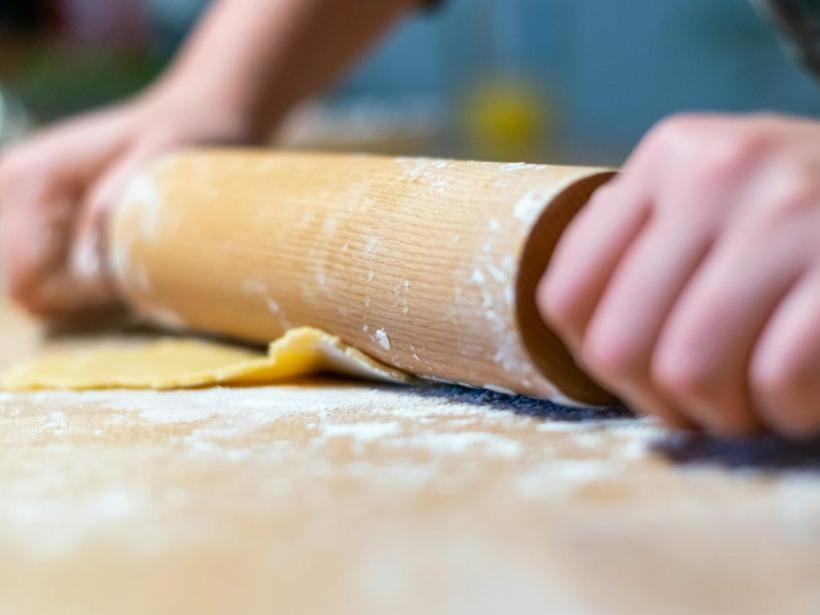
Roll the dough in stages, never all at once. Flatten the ball into a rough rectangle, then roll from the center outward with a plain wooden rolling pin, pushing toward the edges. When the sheet grows too wide for your counter, keep going: a pasta sheet can hang over the edge without harm. Aim for a final thickness of about 1 to 2 mm, thin enough that you can see the shadow of your hand through it.
Flour lightly and often, but brush off the excess before cutting. Turn the sheet a quarter turn after every few passes of the pin, because turning keeps the shape even and stops the dough from shrinking back. If it fights you and springs tight, cover it with a towel and rest it for 10 minutes; the gluten relaxes and rolling gets easy again.
Judge thickness by feel and by eye together. Egg pasta should look almost translucent at the edges, while plain flour-and-water noodles can stay slightly thicker, closer to 2 mm, since they cook a bit softer.
How do you cut even noodles with a knife?

Let the rolled sheet rest uncovered for 10-15 minutes until the surface feels dry to the touch, then dust it lightly with semolina or flour. A dry surface keeps the blade from dragging and gives you clean edges instead of ragged ones.
Fold the sheet into a loose flat roll about 3 inches (7-8 cm) wide, or fold it in thirds like a letter. Cut across the roll with a sharp knife at 1/4 inch (6 mm) for fettuccine-style noodles or 1/8 inch (3 mm) for thin strands, and keep the pressure steady through each cut.
Unroll each coil right away, toss the strands with a little semolina, and spread them on a floured tray in loose nests. Fresh noodles keep for about 2 hours on the counter without sticking.
- Use a long, sharp chef's knife and cut with the full blade, not just the tip.
- Dust the sheet, not the knife, so the flour stays where it is needed.
- Cut a few test strips first and cook them to check the thickness.
- Separate the strands within a minute of cutting, before they press together.
- Keep the nests small, about one serving each, so they cook evenly.
How long do fresh noodles take to cook?

Fresh noodles cook fast: egg noodles need 2 to 3 minutes in boiling water and plain water-based noodles need 3 to 4 minutes. Use a large pot with at least 4 quarts (4 liters) of water and 1 tablespoon (17 g) of salt per 4 quarts. That ratio seasons the noodles as they cook, since they absorb water from the first second.
Start tasting about a minute before the shortest time. Done noodles are tender with a slight bite at the center, and they look glossy rather than pasty. Lift one out with a fork, cool it for a few seconds and bite it. Drain as soon as they are ready, because they soften fast in the hot colander.
What can go wrong with hand-rolled noodles?
Sticky dough means too much water or too little rest, so dust the board with flour, knead for 1 minute and rest it for 15 minutes before rolling again. Sheets that tear are usually too thin at the edges, so roll from the centre outwards and keep the pins of pressure even.
Gummy noodles come from crowded water or a pot that is too small. Cook 100 g (3.5 oz) of fresh noodles in at least 2 litres (8 cups) of boiling salted water, stir once in the first 30 seconds, then taste at 2 minutes.
- Dough springs back while rolling. Cover it and rest for 10 minutes to relax the gluten.
- Noodles clump in the pot. Lift them with tongs, separate gently and add a splash of the cooking water.
- Sheets stick to the board. Slide a bench scraper underneath and dust with semolina or fine flour.
- Pasta turns grey and dry. Wrap the cut noodles in a clean towel and cook within 30 minutes.
- Noodles taste floury in the middle. Roll thinner next time and cook 30 seconds longer.
Frequently asked questions
Can I make these noodles without eggs?
Yes. Use 2 cups (250 g) of all-purpose flour, 1/2 cup (120 ml) of water and a pinch of salt. The dough is stiffer and less rich, so rest it for at least 30 minutes and roll it a little thinner before cutting.
How far ahead can I make fresh noodles?
You can make them a few hours ahead and keep them dusted with flour on a tray under a clean towel. For longer storage, dry them for 1-2 hours until leathery, then freeze them in a single layer and bag them.
Why did my noodles turn out gummy?
The dough was probably too wet or the noodles were cut too thick. Add flour a tablespoon at a time while kneading, roll the sheet thinner and test a single strand in boiling water before cooking the whole batch.
Do I have to rest the dough?
Resting for 30 minutes lets the flour hydrate and the gluten relax, which makes the sheet easier to roll thin without springing back. Skipping it works in a pinch, but the dough will fight the rolling pin.
Photo: Sabine Krafczyk, Unsplash (Unsplash License)