
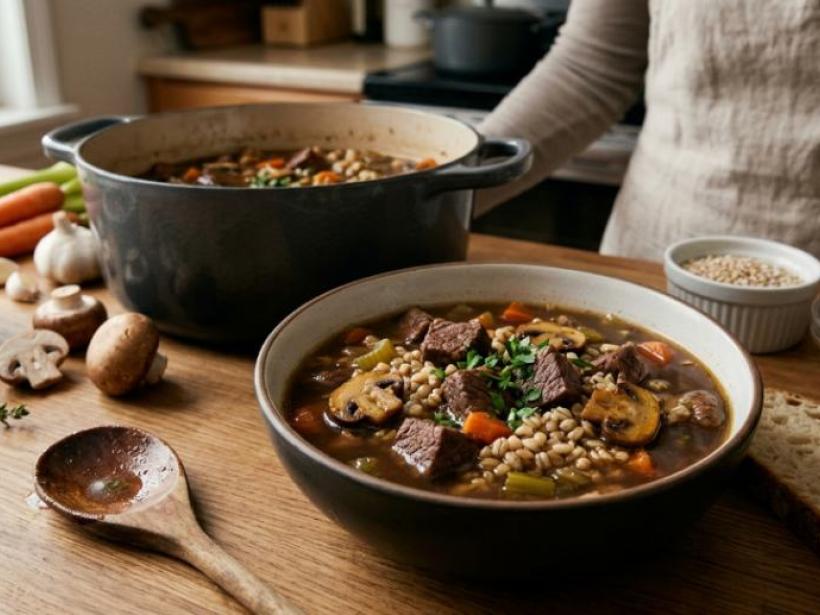

Some soups are a starter. Beef and barley soup is dinner. A bowl of it has tender chunks of beef, barley with a little chew left in it, and a dark broth that tastes like it spent the whole afternoon on the stove, which it did. This recipe for beef and barley soup needs a little over two hours from start to finish. Only about 40 minutes of that is actual work, though. For the rest, the pot does its thing and you get on with your evening.
A full pound of mushrooms goes in, and I wouldn’t cut that back. They shrink down, darken the broth, and give it a savory depth that beef alone doesn’t quite reach. You’ll see this dish called barley and beef soup or mushroom barley soup, depending on who’s cooking. Whether you’re browning beef for the first time or you’ve made soup every Sunday for years, the method below holds up.
Active Time: 40 minutes
Total Time: 2 hours 30 minutes
Servings: 6
Ingredients
Everything on this list sits in a regular grocery store. For this beef barley and mushroom soup, you’ll need:
- 700 g (1½ lb) beef chuck, trimmed of large pieces of fat
- 1 tsp salt and ½ tsp black pepper, for seasoning the beef
- 2 tbsp olive oil, divided
- 450 g (1 lb) cremini mushrooms, sliced
- 1 medium onion, diced
- 2 medium carrots, diced
- 2 celery stalks, diced
- 3 garlic cloves, minced
- 2 tbsp tomato paste
- 2 liters (8 cups) low-sodium beef broth
- 1 tbsp Worcestershire sauce
- 2 bay leaves
- 4 sprigs fresh thyme (or 1 tsp dried)
- 150 g (¾ cup) pearl barley
- 1 tbsp red wine vinegar or fresh lemon juice
- Chopped fresh parsley, for serving
What’s the Best Cut of Beef for Beef Barley Soup?
Go with chuck. It has plenty of fat and connective tissue, and after an hour or more in simmering broth, that tissue softens until the meat pulls apart with a spoon. Lean cuts like sirloin behave the opposite way. Give them a long simmer, and they turn dry and stringy.
Short ribs are a good upgrade if you don’t mind the price. Jewish deli-style mushroom barley soup often uses flanken, a cross-cut short rib, and the broth comes out richer for it. Leftover pot roast or steak also works. Cube it, stir it in with the barley, and you can skip the first hour of simmering altogether.
Should You Use Pearl or Hulled Barley?
For most cooks, pearl barley. Processing strips away the hull and most of the bran, so it cooks faster and skips the overnight soak.
Hulled barley is the whole-grain option. Because it keeps its bran, it brings more fiber and a noticeably chewier bite. The trade-off is time. If you use it, add it together with the beef rather than an hour later, and start tasting it well before the end. Cooking times swing a lot between brands, so check the package either way.
Which Mushrooms Work Best?
Cremini are the safe bet. Some stores label them baby bella. They taste earthier than white button mushrooms and keep their shape through a long simmer. Portobellos work too, as long as you scrape out the dark gills first, since the gills can make the broth look muddy.
Want more depth? Use half cremini and half shiitake. Pull the stems off the shiitakes, because they stay woody no matter how long they cook.
Instructions
This beef mushroom and barley soup comes together in three stages: brown, simmer, then barley. Nothing here takes special skill. Still, each stage sets up the next, so it pays not to rush.
Preparation
Start by patting the beef dry with paper towels. Surface moisture makes meat steam in the pan instead of browning. Cut it into 2 cm (¾ inch) cubes and season them with the salt and pepper.
Next, dice the onion, carrots, and celery into small, even pieces. Slice the mushrooms about 5 mm (¼ inch) thick, and mince the garlic. Put the barley in a fine sieve and rinse it under cold water until the water runs mostly clear. Rinsing washes off loose surface starch, which helps keep the broth from turning cloudy.
Do You Need to Brown the Beef?
Technically, no. But those ten minutes make a real difference. Browning builds a dark, savory crust on the meat, and it leaves sticky brown bits on the bottom of the pot. Later, those bits dissolve into the broth and give it a depth that’s hard to get otherwise. Skip the step, and you’ll still have soup. It’ll just taste flatter.
Cooking
Heat 1 tbsp of the oil in a large Dutch oven over medium-high heat. Add half the beef in a single layer, leaving space between the pieces. Crowded meat releases its juices and ends up steaming. Let the cubes brown on all sides, turning them every couple of minutes, for about 6 to 8 minutes per batch. Move the first batch to a plate, then repeat with the rest.
Pour the remaining oil into the same pot and add the mushrooms. At first, they’ll give off a surprising amount of water. Keep cooking, stirring now and then, for 8 to 10 minutes, until the liquid disappears and the mushrooms turn golden. After that, add the onion, carrots, and celery and cook for about 5 minutes. Stir in the garlic and tomato paste and give it one more minute.
How Do You Deglaze the Pot?
Pour in about 240 ml (1 cup) of the broth. Using a wooden spoon, scrape the bottom of the pot until all the browned bits come loose. Once the bottom looks clean, return the beef and its plate juices to the pot. Add the rest of the broth, the Worcestershire sauce, bay leaves, and thyme.
Bring everything to a boil. Then turn the heat down to low, cover the pot, and let it simmer gently for 1 hour.
When Do You Add the Barley?
Add it after that first hour. Stir it in, cover the pot again, and simmer for another 40 to 45 minutes. You’re looking for barley that’s soft but still has a little chew. By this point, the beef should fall apart when you press it with a fork. If it still fights back, give the pot another 10 to 15 minutes.
Keep an eye on the liquid as it cooks, because barley drinks up a lot of broth. A splash of water or extra broth fixes a pot that looks too thick. Finally, fish out the bay leaves and thyme stems, stir in the vinegar, and taste. It’ll probably want a pinch more salt.
Why Did My Soup Get So Thick?
Because barley never stops soaking up liquid, even after the heat goes off. A pot that looks perfect at dinner can set into something closer to stew by the next morning. Nothing went wrong. Loosen it with broth or water as you reheat it.
Serving
Ladle the soup into bowls and scatter chopped parsley over the top. Crusty bread or a buttered roll is the classic side. A green salad works if you want something lighter.
This beef and barley soup with mushrooms also makes easy meal prep. Portions hold up well in the fridge, and plenty of cooks swear it tastes better on day two. Keep leftovers in an airtight container and finish them within 3 to 4 days, in line with USDA guidance for cooked leftovers.
Nutritional Value Per One Serving
Nutrition Facts
One serving
- Calories: 400
- Total Fat: 18 g
- Saturated Fat: 6 g
- Cholesterol: 75 mg
- Sodium: 720 mg
- Total Carbohydrates: 31 g
- Dietary Fiber: 6 g
- Sugars: 5 g
- Protein: 29 g
These figures are estimates based on typical values for each ingredient. The beef cut and broth brand affect fat and sodium the most.
Is Beef and Barley Soup Healthy?
It makes a balanced meal. The beef supplies protein, around 29 grams per serving here. Barley adds fiber, including a soluble type called beta-glucan, which research links to lower cholesterol at intakes of roughly 3 grams a day or more.
A few caveats apply, though. Pearl barley has less fiber than hulled, since processing removes most of the bran. Store-bought broth can push sodium up fast, so buy low-sodium and salt at the end. Barley also contains gluten, which rules this version out for anyone with celiac disease unless you swap the grain.
Tips and Variations
Once you’ve made the base recipe, it’s easy to bend. These swaps all work:
- Gluten-free: swap the barley for brown rice or quinoa and adjust the cooking time
- More mushroom flavor: soak a handful of dried porcini in hot water, chop them, and add the strained soaking liquid to the broth
- Red wine: deglaze with 120 ml (½ cup) dry red wine before the broth goes in
- Extra vegetables: add diced potatoes or frozen peas during the last 15 minutes
- Greens: stir in chopped kale just before serving
Can You Freeze Beef and Barley Soup?
Yes, and it freezes well. Let it cool completely, then ladle it into freezer-safe containers, leaving a little room at the top for expansion. Expect the barley to soften slightly and the soup to thicken once thawed. Move it to the fridge the night before, then reheat it on the stove with a splash of extra broth. For the best texture and flavor, eat it within 2 to 3 months.
What Mistakes Should Beginners Avoid?
Crowding the pan causes the most trouble. Pile in too much beef at once, and you get gray, steamed meat instead of a brown crust. Rushing the simmer comes a close second. Chuck needs time to go from chewy to tender, so resist pulling it early. People also forget the acid. A spoonful of vinegar at the end sounds strange, yet it brightens the broth and keeps it from tasting heavy.
How Can Experienced Cooks Get More Flavor?
Start with a stronger base. Brown a few beef bones or a piece of oxtail alongside the chuck, let them simmer in the broth, and lift them out before the barley goes in. The gelatin they release gives the soup more body.
You can also split the mushrooms. Food52’s version browns half at the start and adds the rest with the barley, so you end up with two textures: dark mushrooms melted into the broth and meatier slices on top.
Conclusion
Beef and mushroom barley soup doesn’t ask for much. Brown the beef properly, give it time, and add the barley at the right moment. Get those three things right, and most of the work is done.
Make it as written the first time. Next round, try the red wine, the porcini, or a handful of kale. And freeze a few portions while you’re at it. Some cold, tired weeknight, you’ll open the freezer and be very glad you did.