
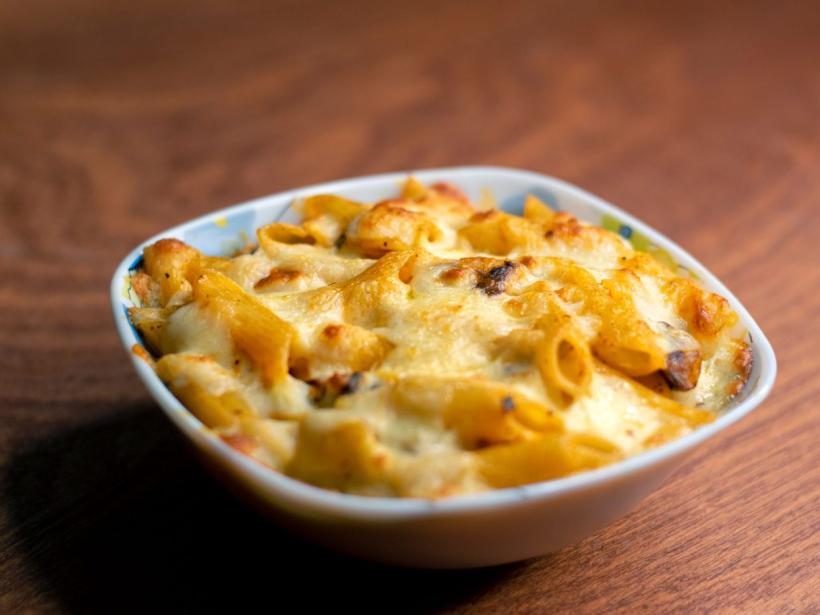
What is baked ziti and how is it different from lasagne?
Baked ziti is a pasta casserole that layers ziti tubes with tomato sauce and a mixture of ricotta, mozzarella and Parmesan, then bakes everything until the cheese is bubbling and the edges turn crisp. The dish originated in southern Italian home kitchens as a simpler, faster alternative to layered pasta bakes. It fits a weeknight because you toss the components together rather than building precise layers.
The main difference from lasagne comes down to assembly and the final texture. Lasagne requires you to spread sauce, flat noodles and filling in repeated even layers, which takes time and a steady hand. Ziti tubes trap sauce and cheese inside their hollow centres, so stirring the pasta directly into the sauce and cheese mixture gives you a more rustic, varied bite. Some pieces stay soft and coated, while the top layer of cheese browns and forms a chewy crust that you do not get with lasagne.
Baked ziti also tends to feel lighter on the plate because the pasta-to-filling ratio shifts. Lasagne uses wide sheets that act as structural walls between dense ricotta and meat layers, while ziti relies on the tube shape and a looser cheese blend for its character. If you have ever pulled a forkful of lasagne apart and wished for more sauced pasta in each mouthful, baked ziti delivers.
What ingredients do I need for three-cheese baked ziti?
You need 450 g of dried ziti pasta. You also need 700 ml of a simple tomato sauce, which can be homemade or a good quality jarred marinara. The three cheeses are 250 g of whole-milk ricotta, 300 g of low-moisture mozzarella (shredded or torn into small pieces), and 60 g of freshly grated Parmesan, divided into two 30 g portions.
Ricotta gives the dish creamy, slightly sweet layers and stops the pasta drying out in the oven. Mozzarella melts into signature stretchy pockets and gives a mild milky flavour. You use Parmesan twice: stir half into the ricotta mixture for a salty, nutty depth, and sprinkle the rest on top to form a golden, crisp crust. For the ricotta layer you also add one large egg, a pinch of salt, and a few cracks of black pepper to bind the cheese and season it evenly.
Easy swaps make the dish practical. If ziti is unavailable, penne rigate works well because its ridges and hollow centre catch the sauce. Whole-milk ricotta can be replaced with a well-drained dry cottage cheese for a lighter result. Low-moisture mozzarella is essential for proper melting. Fresh mozzarella in brine releases too much water and is not a direct substitute. For the Parmesan, Grana Padano or a mature Pecorino Romano work equally well. Pecorino adds more salt, so taste the ricotta mixture before adding extra salt.
- 450 g dried ziti pasta (or penne rigate)
- 700 ml simple tomato or marinara sauce
- 250 g whole-milk ricotta (or well-drained dry cottage cheese)
- 300 g low-moisture mozzarella, shredded
- 60 g freshly grated Parmesan, divided into two 30 g portions
- 1 large egg, plus salt and black pepper for the ricotta mixture
How do I make baked ziti step by step?
Start by heating the oven to 190°C and bringing a large pot of salted water to a rolling boil. Cook 500 g of ziti for about two minutes less than the packet says. The pasta will finish cooking in the oven, and underboiling now stops it from turning mushy later. Drain the ziti and toss it with a small drizzle of olive oil so the tubes do not stick together while you mix the filling.
In a large bowl, combine 425 g of ricotta with one beaten egg, 100 g of grated Parmesan, a handful of chopped parsley, and a pinch of black pepper. The egg binds the ricotta so the filling stays creamy and does not dry out into a grainy layer. Fold the drained ziti into the ricotta mixture, then stir in two-thirds of a 400 ml jar of good tomato passata. The sauce coats every tube lightly, it should not drown the pasta.
Spread a thin layer of the remaining passata across a 23 x 33 cm baking dish. Tip in half the dressed ziti, scatter over 150 g of torn mozzarella, then add the rest of the pasta. Top with the last of the passata and another 150 g of mozzarella. Cover tightly with foil and bake for 20 minutes. Uncover and bake for 10 to 15 minutes more, until the cheese is bubbling and the edges are crisp. Rest the dish for five minutes before serving. This short wait lets the layers settle so each portion holds its shape on the plate.
Can I prepare baked ziti ahead of time?
Yes, you can assemble the whole dish up to 24 hours before baking. Build the ziti right to the point of sliding it into the oven, then cover the dish tightly with foil and refrigerate it. The pasta will soak up more sauce overnight, which deepens the flavour but also softens the texture a little.
When you are ready to bake straight from the fridge, add 10 to 15 minutes to the covered baking time. Uncover for the last 5 minutes as usual so the cheese on top melts into a golden crust. Let the dish sit on the counter while the oven heats, just to take the chill off the baking dish.
Freezing works well for longer storage. Assemble the ziti in a freezer-safe dish, wrap it tightly in a double layer of foil, and freeze for up to 3 months. Bake it straight from frozen at 180°C, keeping it covered for the first 30 minutes, then uncover and continue baking until the centre is piping hot. A probe thermometer should read at least 74°C in the middle before you pull it out.
What should I serve with baked ziti?
Baked ziti is rich and filling, so pair it with sides that cut through the cheese and bring a bit of freshness or crunch. Something green, something crisp and maybe one extra vegetable dish make the meal feel complete without much extra work.
A simple salad takes two minutes while the pasta rests, and roasted vegetables can go into the oven on a second shelf. Here are my go-to sides that balance the richness of a three-cheese baked ziti.
- Crisp green salad with lemon vinaigrette. Toss mixed leaves, thinly sliced fennel or cucumber and a sharp dressing made from lemon juice, olive oil and a pinch of salt. The acidity cuts through the melted cheese and keeps every bite tasting fresh.
- Garlic bread or focaccia. A crusty loaf warmed in the oven with butter, garlic and a little parsley gives you something to mop up the sauce. I often slice a ciabatta in half, spread it with garlic butter and bake it for the last five minutes alongside the ziti.
- Roasted broccoli or broccoli rabe. Toss florets with olive oil, salt and chilli flakes, then roast at 200°C for about 12 minutes until the edges char slightly. The slight bitterness of broccoli rabe works especially well against the creamy ricotta and mozzarella.
- Sautéed green beans with almonds. Blanch trimmed beans for two minutes, drain and finish them in a hot pan with a little butter and a handful of flaked almonds. They stay bright and snappy, adding a different texture to the soft pasta.
- Marinated cherry tomatoes. Halve a punnet of cherry tomatoes and let them sit for ten minutes with olive oil, red wine vinegar, salt and a torn basil leaf. They bring a juicy, tangy pop that lightens the whole plate.
Frequently asked questions
Can I use a different pasta shape?
Yes. Penne, rigatoni or mostaccioli work well because their tubes and ridges hold the sauce. Avoid long noodles like spaghetti, which do not layer neatly in a casserole.
How do I keep baked ziti from drying out?
Undercook the pasta by about 2 minutes less than the packet says, and make sure your sauce is a little looser than you would use for a quick stovetop dish. Covering the dish with foil for the first 20 minutes of baking also traps steam.
Can I add meat to this recipe?
Yes. Brown 450 g of minced beef or Italian sausage in a pan, drain the fat, and stir it into the tomato sauce before you layer the dish. The baking time stays the same.
What is the best way to reheat leftovers?
Cover the portion with foil and warm it in a 180 °C oven for 15 to 20 minutes. The microwave works in a pinch, but the pasta softens and the cheese loses its crisp top.
Photo: Mohammad Fahim, Pexels (Pexels License)