
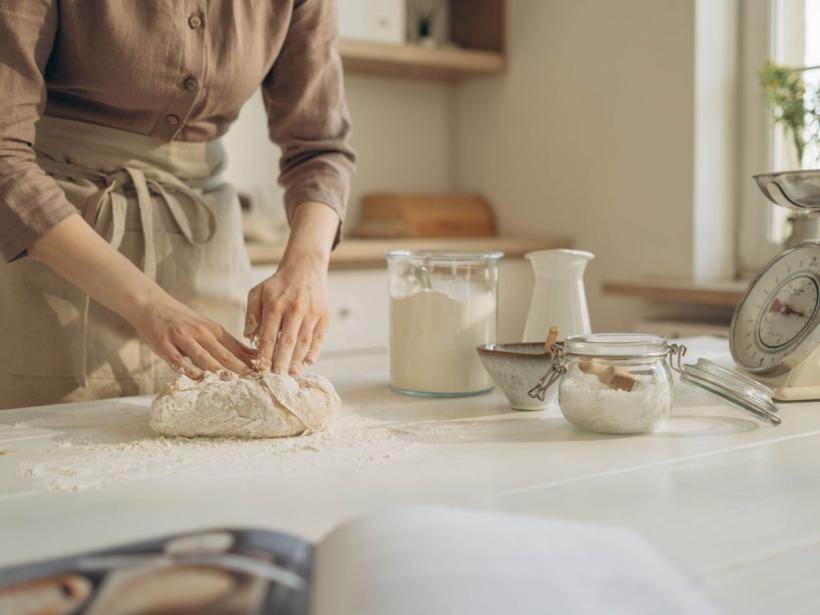
What ingredients do I need for soft bread rolls?
Each ingredient has a specific job. The flour builds the structure, the milk and butter add tenderness, and the yeast gives the rolls their lift. Here is exactly what you need and why.
For eight large rolls, gather these amounts:
- 3½ cups (438 g) bread flour, plus extra for dusting. Bread flour has more protein than all-purpose flour, which means more gluten and a taller, airier roll with a nice chewy crumb.
- 1 cup (240 ml) whole milk, warmed to about 110°F (43°C). The fat in whole milk makes the crumb soft and the crust golden. A thermometer helps you get the temperature right; milk that is too hot will kill the yeast.
- 2¼ teaspoons (7 g) instant yeast, one standard packet. Instant yeast mixes straight into the flour without proofing first, which saves you a step.
- 2 tablespoons (25 g) granulated sugar. Sugar feeds the yeast for a faster rise and helps the crust brown, but the rolls still taste savory.
- 1 large egg, at room temperature. The egg adds richness and strengthens the dough so the rolls hold their round shape instead of spreading flat.
- 4 tablespoons (57 g) unsalted butter, softened to room temperature. Butter coats the flour proteins, shortening the gluten strands and giving the rolls a tender, pull-apart texture.
- 1 teaspoon (6 g) fine sea salt. Salt tightens the gluten network and balances the sweetness. Measure it level; too little makes the rolls taste flat.
How do I make the dough step by step?

Start by warming your milk to about 105°F to 110°F (40°C to 43°C). It should feel comfortably warm on your wrist, not hot. Pour the warm milk into the bowl of a stand mixer and sprinkle the instant yeast and 1 tablespoon of sugar over the top. Let it sit for 5 to 7 minutes until the surface looks foamy and you can smell that yeasty, bready aroma. If the mixture does not foam, the yeast is likely expired. Start again with a fresh packet.
Add the melted butter, the egg, the remaining sugar, and the salt to the yeast mixture. Use the dough hook on low speed to combine everything for about 30 seconds. With the mixer running, add the flour one cup at a time, letting each addition incorporate before adding the next. Keep mixing until a shaggy dough forms and no dry flour pockets remain at the bottom of the bowl.
Increase the speed to medium-low and knead the dough for 6 to 8 minutes. The dough should pull away cleanly from the sides of the bowl and feel smooth and elastic when you poke it. If it stays sticky and clings to the bowl, add flour a tablespoon at a time. To check if it is ready, tear off a small piece and stretch it gently between your fingers. A properly kneaded dough will stretch into a thin, translucent membrane without tearing, This is called the windowpane test.
Shape the dough into a ball and place it in a large greased bowl, turning it once so the top is lightly coated with oil. Cover the bowl tightly with plastic wrap or a damp kitchen towel and let it rise in a warm, draft-free spot until it doubles in size. This usually takes 60 to 90 minutes, depending on the temperature of your kitchen. The dough is ready when you press two floured fingers into it and the indentations stay visible instead of springing back.
How do I shape and bake the rolls?

Turn the risen dough out onto a very lightly floured surface. Use a bench scraper or a sharp knife to divide it into 12 equal pieces, each about the size of a small tangerine. For perfectly even rolls, weigh the whole dough ball, divide the weight by 12, and pinch off pieces that match that target weight.
Shape each piece into a smooth, tight ball. Cup your hand over a piece of dough and move it in a quick circular motion against the counter, to pull the surface taut. Tuck any loose edges underneath and pinch them together firmly. Place the shaped rolls seam side down on a parchment-lined baking sheet, leaving about 2 inches of space between each one. Cover them loosely with a clean kitchen towel and let them rise in a warm spot for 30 to 40 minutes, until they are visibly puffy and nearly doubled.
About 15 minutes before baking, preheat your oven to 375°F (190°C). When the rolls have finished their second rise, whisk one egg with a tablespoon of water and brush the tops gently with the egg wash. This gives the crust a deep golden color. Bake on the middle rack for 18 to 22 minutes, until the tops are a rich brown and the rolls sound hollow when tapped on the bottom. Transfer them to a wire rack and let them cool for at least 10 minutes before pulling them apart.
What are the best tips and substitutions?

A few simple swaps let you adapt the recipe without losing the tender crumb. You can replace up to half of the all-purpose flour with whole wheat flour for a nuttier flavor; the rolls will be slightly denser, so add an extra tablespoon of milk to keep the dough soft. Bread flour works as a one-to-one substitute and gives the rolls a chewier bite and a higher rise because of its extra protein.
For dairy alternatives, whole milk gives the richest result, but unsweetened oat milk or almond milk work well in the same quantity. Swap the butter for an equal amount of softened coconut oil or a neutral vegetable oil; the texture stays tender, though the buttery taste will be milder. To get a softer crust, brush the rolls with melted butter the moment they come out of the oven and cover them loosely with a clean kitchen towel while they cool.
Small additions change the rolls:
- Knead a teaspoon of garlic powder and a tablespoon of finely chopped fresh rosemary into the dough for a savory dinner roll.
- Add the zest of one orange and a half cup of dried cranberries after the first rise for a bright, slightly sweet breakfast roll.
- Brush the tops with honey butter right after baking for a glossy finish and a hint of sweetness.
- Fold shredded sharp cheddar and a pinch of smoked paprika into the dough before shaping.
- Sprinkle the unbaked rolls with flaky sea salt or everything bagel seasoning for a bakery style top.
- Replace a quarter cup of the flour with grated Parmesan and add a generous crack of black pepper for a roll that pairs with soup.
For the softest possible crumb, measure your flour by spooning it into the cup and leveling it off instead of scooping directly from the bag. Too much flour is the fastest way to dry, heavy rolls.
How do I store and reheat leftover rolls?
Keep freshly baked rolls at room temperature for up to two days. Place them in an airtight container or a zip-top bag once they have cooled completely. Trapping warmth creates condensation that makes the crust soggy, so let them cool completely.
For longer storage, refrigerate rolls in an airtight bag for up to a week. The fridge dries bread out faster than the freezer, so this works best when you plan to toast or reheat them with moisture. For keeping rolls beyond a week, freeze them. Wrap each roll individually in plastic wrap, then place all of them in a freezer bag. They stay fresh for up to three months.
The best reheating method restores that soft, just-baked texture. Run a frozen or refrigerated roll quickly under the tap to wet the outside, then bake it at 350°F (175°C) for 8 to 10 minutes. The water creates steam that revives the crumb. If you are in a hurry, wrap a roll in a damp paper towel and microwave it for 15 to 20 seconds. Eat it right away, as microwaved rolls turn chewy as they cool.
Frequently asked questions
Can I make the dough ahead of time?
Yes. After the first rise, punch the dough down, cover it tightly, and refrigerate overnight. The next day, let it sit at room temperature for 30 minutes before shaping, then proceed with the second rise and baking.
Why did my rolls come out dense?
Dense rolls usually mean the yeast was old, the liquid was too hot and killed the yeast, or the dough did not rise long enough. Always check your yeast's expiration date and use warm water, about 110°F (43°C).
Can I use whole wheat flour?
You can replace up to half of the all-purpose flour with whole wheat flour. Using more than half will make the rolls denser and drier, so you may need an extra tablespoon of milk to keep them tender.
Photo: Ron Lach, Pexels (Pexels License)