
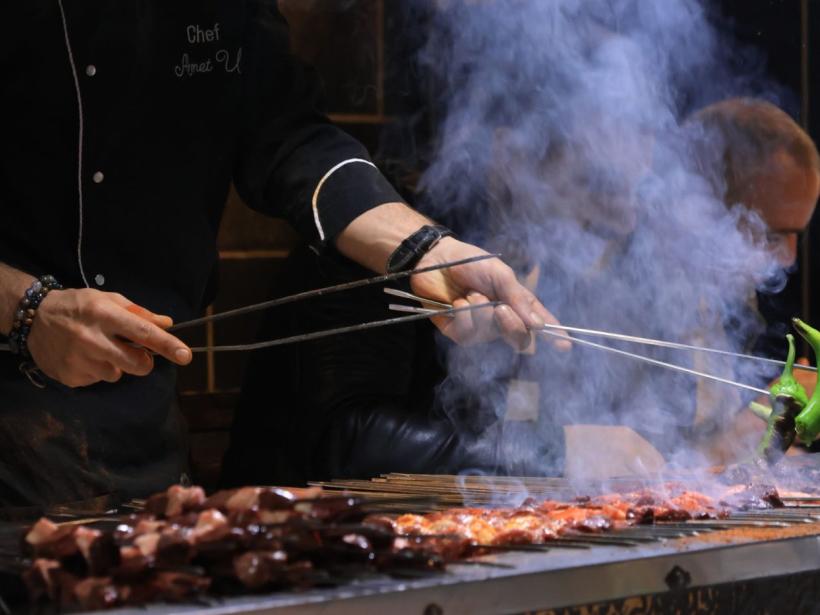
What is the basic rule for building a skewer appetizer?
A skewer appetizer works best when you build it in three layers: a sturdy base, a soft middle, and a bright finish. The base anchors the bite and keeps it from sliding off the stick when you pick it up. The middle adds body and creaminess. The finish delivers a pop of acidity or freshness that wakes up the whole bite.
Order matters as much for the mouth as it does for the board. You want the heaviest, firmest piece on the bottom so the skewer stands up and stays balanced. When someone eats it, the sequence of textures unfolds in a way that feels deliberate: crunch or chew first, then smoothness, then a clean, juicy note that cuts through the richness. Slide the ingredients just close enough that they touch but do not squash each other.
Stick to four or five pieces per skewer. More than that gets clumsy to eat in one bite, and fewer makes the skewer look unfinished. Pick a skewer length that fits your serving plate and leaves an inch of bare stick for a clean grip.
How do I make a meat skewer appetizer?

A Mediterranean chicken skewer with roasted red pepper and a briny olive is a reliable crowd-pleaser. The meat stays juicy because of a quick yogurt marinade, and the high heat of the broiler gives you a light char in just a few minutes without drying anything out.
Start by cutting 1 lb (450 g) of boneless, skinless chicken thighs into 1-inch cubes. Thighs work better than breast here because they hold moisture under direct heat. Marinate the cubes for 30 minutes at room temperature, or up to 2 hours in the fridge, in a mixture of 3 tbsp plain yogurt, 1 tbsp olive oil, 1 minced garlic clove, 1 tsp dried oregano, and 1/4 tsp salt. Do not go longer than 2 hours or the acid in the yogurt can start to make the meat mushy.
Thread the marinated chicken onto soaked 4-inch bamboo skewers, alternating each piece with a square of jarred roasted red pepper and a pitted Kalamata olive. Leave a tiny gap between pieces so heat can circulate. Arrange the skewers on a foil-lined baking sheet and broil 4 inches from the heat source for 4 minutes, flip with tongs, and broil another 3 to 4 minutes until the edges are lightly browned and the chicken is cooked through.
- Soak bamboo skewers in cold water for 20 minutes before threading to prevent burning.
- Pat the chicken cubes dry with a paper towel before adding the marinade so it sticks instead of sliding off.
- Cut the roasted red pepper into squares roughly the same size as the chicken cubes for even cooking and a neat look.
- If you do not have a broiler, a hot grill pan over medium-high heat works well, turning the skewers every 2 minutes.
- Let the skewers rest for 2 minutes after broiling before serving so the juices settle back into the meat.
- A small pinch of flaky sea salt and a squeeze of lemon right before serving brightens the whole bite.
How do I make a cheese skewer appetizer?
A cheese skewer works best when you pair a soft, mild cheese with something sweet and something herbal. The combination of creamy fresh mozzarella, a juicy grape, and a basil leaf gives you a bite that is balanced without any single flavor taking over. Keep the cheese cold right up until you assemble the skewers so it holds its shape and does not crumble.
Use fresh mozzarella balls (bocconcini, about 1 oz or 30 g each) straight from the brine. Pat them dry with a paper towel so the balsamic drizzle sticks to the cheese instead of sliding off. Cut larger balls in half with a thin, sharp knife using one clean downward motion, never a sawing motion, which tears the soft curd. Thread one grape, one basil leaf folded in half, and one mozzarella ball onto a 4-inch bamboo skewer. Drizzle with a good balsamic glaze right before serving and finish with a pinch of flaky salt.
- Dry the mozzarella thoroughly on paper towels so the glaze grips the surface.
- Cut larger bocconcini in half with a single downward slice to keep the edges clean.
- Fold the basil leaf in half before threading so it does not flap loosely on the skewer.
- Drizzle the balsamic glaze at the last moment to prevent the cheese from turning slippery.
- Add a tiny pinch of flaky salt on the cheese to make the sweetness of the grape pop.
How do I make a vegetable skewer appetizer?

A grilled vegetable skewer with halloumi gives you a warm, satisfying bite that holds its shape on the plate. Halloumi is a firm Cypriot cheese that does not melt when heated, so it stays on the skewer and develops a golden crust on the grill. Cut one medium zucchini into rounds about half an inch thick so they cook at the same rate as the other pieces.
Thread the skewers in a pattern that balances color and cooking time. Start with a cherry tomato, add a zucchini round, then a cube of halloumi roughly the same thickness as the zucchini, and repeat twice. Brush each skewer with a mix of 3 tablespoons olive oil, 1 teaspoon dried oregano, and a pinch of salt. Grill over medium-high heat for 3 minutes per side, turning once when the cheese shows dark grill marks.
- Zucchini rounds cut uniformly cook through without burning.
- Cherry tomatoes burst slightly and add juiciness to each bite.
- Halloumi stays firm and does not drip through the grill grates.
- Brushing with oil and herbs before grilling prevents sticking and adds flavor.
- A squeeze of lemon right before serving brightens the whole skewer.
Pull the skewers off the grill the moment the zucchini is tender with a little bite left. If the tomatoes split too early, move the skewers to a cooler part of the grill. Serve them warm on a flat platter with a small bowl of lemony yogurt on the side for dipping.
What flavor combinations work best on a skewer?
The best skewer appetizers balance contrasting tastes. You want a pairing where one ingredient balances the other, so every bite feels complete instead of flat or one-note.
Three pairings that always work are salty with sweet, creamy with acidic, and smoky with fresh. Salty cured meat and ripe fruit cut through each other beautifully. A rich cheese needs something sharp or pickled to cut through the richness. Grilled or charred elements call for a crisp, cool partner that clears the palate.
- Prosciutto and cantaloupe melon, a classic salty-sweet match that stays juicy.
- Feta cheese and watermelon cubes with a small mint leaf tucked between them.
- Smoked turkey or smoked gouda with a fresh grape and a squeeze of lemon juice.
- Grilled halloumi and a cherry tomato half, giving you smoky warmth against bright acidity.
- Blue cheese and a slice of ripe pear, where the creamy funk meets gentle sweetness.
- Salami and a cornichon or pickled onion, a bold, briny contrast to the fatty meat.
When you thread the skewer, place the dominant flavor in the middle so it hits your tongue first, then finish with the fresher element last for a clean aftertaste.
How far ahead can I assemble skewer appetizers?

Most skewer appetizers hold up well for 4 to 6 hours in the fridge, but the safe window depends entirely on what you put on them. Meat and cheese components are forgiving and can be skewered the night before. Fresh vegetables and bread, on the other hand, lose their texture quickly and belong on the stick at the last minute.
For a next-day party, build your skewers with cured meats, hard cheeses, olives, pickles, and cherry tomatoes. Wrap the finished tray tightly in plastic wrap and refrigerate. Leave off anything that wilts or goes soggy: fresh basil, arugula, soft bread cubes, and sliced cucumber. Add those within an hour of serving, then let the skewers sit at room temperature for 15 minutes before guests arrive so the cheese comes to room temperature.
How do I arrange skewers on a platter so they look inviting?
Start with a flat, rimless platter in a neutral color so the food stands out. Wood boards, slate tiles, and plain white ceramic all work well. Aim for height and movement, not identical rows.
Place a small upside-down bowl or a folded tea towel in the center of the platter, then drape a few lettuce leaves or parchment paper over it. Lean the longest skewers against this raised center at a slight angle, fanning them outward like spokes. Shorter skewers go around the edge of the platter, flat, with the handle ends pointing the same direction so guests can grab them easily.
- Group skewers by color in blocks: all the red tomato-and-mozzarella skewers together, then a block of green cucumber ones, then a block of golden cheese and pineapple. Color blocking reads as intentional and makes the tray look fuller.
- Stick to one garnish. A few rosemary sprigs tucked between the skewers add a woodsy scent and look polished. Scattered fresh herbs or edible flowers work too. Avoid chopped parsley or loose leaves that wilt and look messy after twenty minutes.
- Leave the handles bare. Wrapping every skewer handle in plastic or foil makes the platter look fussy and slows guests down. If you want a tidy look, trim wooden skewers to the same length with kitchen shears before assembling.
- Fill gaps with small whole ingredients from the skewers: a few cherry tomatoes, grapes, or cubes of the same cheese. These act as edible spacers and tie the whole arrangement together without adding extra work.
For a buffet table, split the batch across two smaller platters and replenish one while the other is out. A platter three-quarters full with handles pointing the same way looks more inviting than one crammed edge to edge with skewers pointing in all directions.
Frequently asked questions
What kind of skewers should I use for appetizers?
Short bamboo skewers, 4 to 6 inches long, work best because they fit on a small plate and are easy to hold. Soak them in water for 20 minutes before adding any ingredient that will go under the broiler or on the grill. For a dressier look, use reusable stainless steel picks with a decorative end.
My cheese keeps cracking when I push it onto the skewer. What am I doing wrong?
Cold, firm cheese is more likely to split. Let the cheese sit at room temperature for 15 minutes before cutting, and use a gentle twisting motion as you slide it on rather than pushing straight down. Softer cheeses like fresh mozzarella or feta should be the last piece added so they do not bear the weight of other ingredients.
How many skewers should I plan per person?
For a cocktail party where appetizers are the only food, plan on 4 to 6 skewers per person. If the skewers are part of a larger spread with dips, a cheese board, or other passed items, 2 to 3 per person is enough. A mix of meat, cheese, and vegetable options gives guests a choice without making extra work for you.
Can I serve skewer appetizers without a grill or broiler?
Yes. Many skewer appetizers are served cold or at room temperature and need no cooking at all. Cheese and fruit skewers, caprese skewers, and antipasto skewers with cured meat, artichoke hearts, and olives are all fully no-cook options that hold up well on a buffet.
Photo: Gönüldenbirkare, Pexels (Pexels License)