
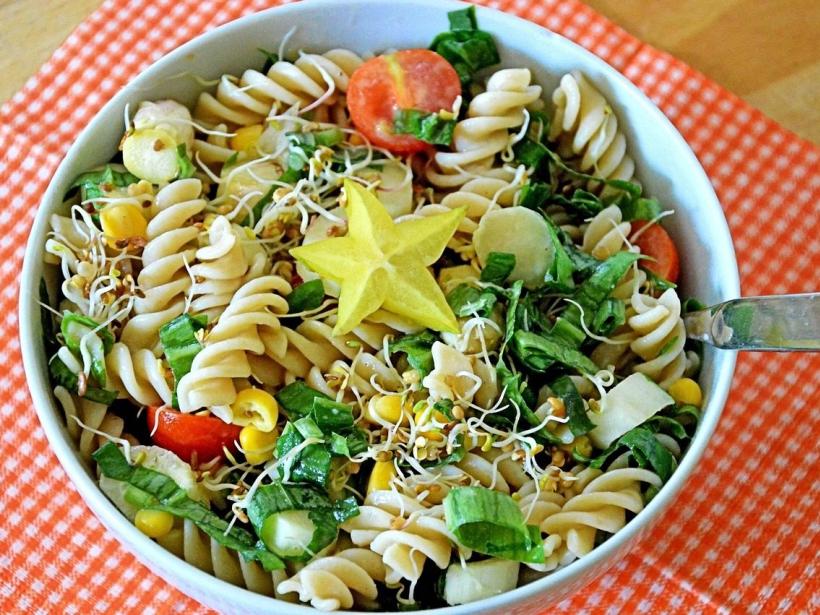
Why does pasta shape matter in a salad?
The shape of the pasta determines how much dressing, herbs, and small bits of vegetable or cheese cling to each bite. A smooth, straight tube with no ridges lets most of the vinaigrette slide right off, leaving you with a bland, slippery mouthful and a puddle of dressing at the bottom of the bowl. A shape with twists, hollows, or ruffled edges traps the good stuff and distributes it evenly.
The texture of the salad changes as well. Short, sturdy shapes hold their own against crunchy celery, toasted nuts, or diced peppers. Long, thin noodles tangle and clump, making it hard to scoop a balanced forkful. For a cold pasta salad that sits in the fridge, the right shape stays separate and coated, not glued together in a block.
Which pasta shapes work best for creamy salads?

Creamy dressings cling best to pasta with ridges, hollow centers, and plenty of surface area. A smooth strand like spaghetti lets the dressing slide right off, so the bite tastes bland. Short, sturdy shapes trap the sauce inside and carry it all the way to your fork.
You want a shape that scoops and holds. Look for twists, tubes, and little bowls that catch bits of mayo, ranch, or yogurt dressing in every nook. These shapes work best for creamy pasta salads.
- Fusilli. The tight corkscrew spirals grip thick dressing along the entire length. Each twist holds a pocket of sauce, so every bite tastes rich and coated.
- Penne. The angled cut and ridged exterior grab creamy dressing on the outside, while the hollow tube fills up from the inside. A forkful gives you both texture and sauciness.
- Farfalle. The pinched center stays slightly firmer than the frilled edges, which makes a chewy spot that catches dressing. The flat petals layer nicely with chopped add-ins like celery or chicken.
- Shells. Small or medium shells act like tiny scoops. Creamy dressing pools inside the cavity, and the curved shape holds peas, diced ham, or shredded cheese without letting them slip away.
- Rotini. Tighter and shorter than fusilli, these spirals pack even more ridges per bite. They work especially well with thicker dressings that need a lot of grip, like a sour cream and herb blend.
What should I use for oil-based or vinaigrette salads?
Thin dressings slide right off smooth pasta, so choose shapes with ridges, twists, or hollow centers to trap every drop. Oil and vinegar mixtures lack the cling of mayonnaise or yogurt, so the pasta itself has to hold the dressing.
Look for short shapes with plenty of surface texture. The dressing pools in the grooves and coats the pasta evenly instead of collecting at the bottom of the bowl. A quick toss right before serving helps, but the shape makes the difference between a well-dressed bite and a bland one.
- Fusilli, the tight corkscrew spirals grab vinaigrette in every groove, making it the top choice for Italian-style pasta salads with tomatoes and olives.
- Rotini, slightly tighter twists than fusilli hold even more dressing and work well with finely chopped herbs that tuck into the coils.
- Penne rigate, the ridges on the outside and the hollow tube catch dressing inside and out, ideal for salads with small diced vegetables.
- Gemelli, a single strand twisted into an S-shape gives you plenty of nooks for thin lemon or herb dressings without the pasta dominating the forkful.
- Cavatappi, ridged spiral tubes with a hollow center trap dressing inside the tube while the exterior grooves pick up whatever is left in the bowl.
How do I match pasta shape to my mix-ins?

Pick a pasta that is roughly the same size as your other ingredients. When every forkful holds a balanced mix of pasta, vegetable, and protein, the salad feels complete and you avoid chasing loose bits around the plate. Short, compact shapes work with small diced add-ins, while longer or wider shapes suit ribbons and strips.
Chunky vegetables like halved cherry tomatoes, cucumber cubes, or roasted bell pepper pieces pair well with medium shells, rotini, or penne. The hollow centers and ridges catch smaller bits of onion or herbs. For beans, chickpeas, or cubed salami, fusilli and farfalle are a reliable match because the twists and folds cradle round, firm ingredients without letting them sink to the bottom of the bowl.
- Shredded chicken or pulled pork: use campanelle or medium shells so the meat tucks into the curves.
- Diced mozzarella or feta: choose rotini or fusilli; the grooves hold crumbled cheese in place.
- Thinly sliced celery, radish, or carrot ribbons: farfalle and gemelli mimic the same width and keep the texture light.
- Olives, capers, or sun-dried tomato strips: stick with penne or cavatappi so the small pieces slip inside.
- Flaked tuna or salmon: opt for orecchiette; the little cups catch the fish without crushing it.
- Corn kernels, peas, or finely diced peppers: use ditalini or small elbows for an even spoonful every time.
Fusilli vs penne vs farfalle: when to use each

Fusilli is the best all-rounder because its deep spiral grooves catch both creamy and oil-based dressings and hold them inside every twist. Small bits like shredded chicken, crumbled feta, or finely diced bell pepper tuck neatly into the coils, so you get a bit of everything in each forkful. Fusilli works especially well in hearty, chunky salads where you want the pasta to hold its own against robust ingredients without getting lost.
Penne has a smooth exterior and a hollow center, making it ideal for thin, clingy dressings that slide right into the tube. A lemon-herb vinaigrette or a light tomato-based dressing pools inside the penne, delivering a bright burst of flavor when you bite into it. The ridges on the outside add just enough grip for grated Parmesan or tiny flecks of fresh herbs, but penne is not the best choice for thick, creamy sauces that tend to sit on the surface rather than penetrating the pasta.
Farfalle, with its pinched center and ruffled edges, brings a softer bite and a delicate look that suits lighter, vegetable-forward salads. The flat surface area picks up oil-based dressings evenly, and the shape nests nicely with tender greens, halved cherry tomatoes, or thin ribbons of prosciutto. Farfalle does not trap heavy mix-ins the way fusilli does, so it is better for salads where the dressing and a few gentle toppings are the focus rather than dense, creamy coatings.
Can I swap in whole wheat, gluten-free, or legume pasta?
You can swap in any of these pastas, but you need to adjust your expectations for texture and cooking time. Whole wheat pasta has a firmer, chewier bite that stands up well to hearty ingredients like roasted vegetables and sharp vinaigrettes. It absorbs dressing a little more slowly than white pasta, so toss the salad while the pasta is still slightly warm to help it soak in.
Gluten-free pasta made from corn and rice can turn mushy or crumble if you overcook it by even a minute. Cook it just to the low end of the package time, rinse it briefly with cold water to stop the cooking, and dress it only after it has cooled completely. Legume pastas, such as chickpea or red lentil, bring extra protein but they release starch into the cooking water and can clump together. Rinse them well after draining and add a splash of extra dressing right before serving, because they tend to drink up oil and vinegar as they sit.
Frequently asked questions
Should I rinse pasta after cooking it for a cold salad?
Yes, a quick rinse with cold water stops the cooking and washes off the extra starch that can make your salad gummy. Drain it well and toss with a tiny splash of oil if you are not dressing it right away.
How do I keep pasta salad from drying out overnight?
Cook the pasta just to al dente, because it will soften as it sits in the dressing. Reserve a little dressing or a spoonful of olive oil and stir it in just before serving to bring the salad back to life.
What is the best pasta shape for a Greek pasta salad?
Short shapes with ridges, like rotini or fusilli, work beautifully. Their twists grab the lemon-oregano vinaigrette and tuck small crumbles of feta and diced cucumber right into the spirals.
Can I use long pasta like spaghetti in a salad?
You can, but it is trickier to serve and eat. If you love long pasta, break the strands in half before cooking and use a thick, clingy dressing like pesto or a creamy Caesar so the noodles do not slide apart on the fork.
Photo: Lebemaja, Pixabay (Pixabay Content License)