
What makes a New York cheesecake different?
A classic New York cheesecake relies on an extra-creamy, dense filling that uses far more cream cheese than other styles. You get a tall, smooth custard that feels rich and heavy on the fork, never airy or mousse-like. The tang comes from full-fat cream cheese and a generous amount of sour cream or heavy cream, which also keeps the texture silky rather than fluffy.
Bakers skip the water bath entirely and use a two-temperature method instead. The cake goes into a hot oven for a short blast, then finishes at a lower temperature. This builds a firm, golden top without soufflé-like puffing, and the centre stays just a little wobbly when you take it out. Flour or cornflour is sometimes added in small amounts to help prevent cracking, but the real structure comes from the eggs and the slow cool-down that follows baking.
What ingredients do I need?
Every ingredient in a New York cheesecake has a job to do, and starting with the right temperature is half the battle. Cold cream cheese will never blend smooth, and cold eggs can shock the batter into seizing. Pull the cream cheese, eggs, and sour cream from the fridge a full hour before you begin so everything reaches room temperature.
Full-fat dairy is non-negotiable for the dense, velvety texture that defines this style. Low-fat or spreadable cream cheese contains extra water and stabilisers that change how the cake sets in the oven. The filling is rich but balanced, with a tang from sour cream and a clean vanilla backbone that lets the cream cheese flavour lead.
- Digestive biscuit crumbs: 200 grams (1 ¾ cups) for a crust that holds together without turning rock-hard. You can crush whole biscuits in a food processor or buy pre-ground crumbs.
- Unsalted butter: 85 grams (6 tablespoons), melted, to bind the crust. Unsalted gives you full control over the seasoning.
- Full-fat brick cream cheese: 900 grams (four 8-ounce blocks) at room temperature. Brick cream cheese is firmer than the tub variety and produces a denser, more stable filling.
- Granulated sugar: 200 grams (1 cup) to sweeten without overpowering the tang. Superfine sugar dissolves faster, but standard granulated works well if you beat it long enough.
- Sour cream: 240 grams (1 cup), full-fat and at room temperature, for the signature slight tartness and a silkier mouthfeel.
- Large eggs: 5 whole eggs plus 2 yolks, all at room temperature. The extra yolks add richness and help the filling set with a custard-like density.
How do I make the crust?
Start with 200 g of digestive biscuits. Blitz them in a food processor until they look like damp sand. If you do not have a processor, put the biscuits in a zip-top bag and roll over them with a rolling pin. Pour the crumbs into a bowl and stir in 90 g of melted unsalted butter and 1 tablespoon of caster sugar. The mixture should hold together when you squeeze a handful. If it still crumbles, add another teaspoon of melted butter.
Tip the buttery crumbs into a 23 cm springform pan. Press them firmly and evenly across the bottom with the flat base of a glass or a measuring cup. Work the crumbs about 2.5 cm up the sides, then run a spoon around the inner edge to pack them tight. A compact, even layer stops the filling from leaking and keeps every slice neat. Chill the crust in the fridge for 20 minutes while you heat the oven to 180 °C (fan 160 °C).
Bake the chilled crust on the middle rack for 10 minutes, until it smells toasty and just starts to turn golden at the edges. This blind bake sets the butter so the base stays crisp under the creamy filling. Let the pan cool on a wire rack while you prepare the filling. Keep the oven on, because the cheesecake goes back in at a lower temperature.
How do I mix the filling without lumps?
A silky filling starts with every ingredient at room temperature. Cold cream cheese will not blend smoothly no matter how long you beat it, so pull the cheese, eggs, and sour cream from the fridge at least two hours before you begin.
Beat the cream cheese alone on medium speed for about two minutes until it looks fluffy and has no visible clumps. Scrape the bowl and paddle thoroughly, then add the sugar and beat for another minute. With the mixer still on medium, add the eggs one at a time, letting each fully disappear before the next goes in. Pour in the sour cream, vanilla, and a pinch of salt last, mixing only until the streaks vanish. Overbeating pumps air into the batter, which makes the cheesecake puff up and then collapse into cracks, so stop the mixer the moment everything is combined. Give the bowl a final scrape and a few turns with a spatula to catch any stubborn bits hiding at the bottom.
What is the best way to bake a New York cheesecake?
A two-stage oven method gives you the signature tall sides and creamy centre. You start with a blast of high heat to create a light golden top and a gentle rise, then drop the temperature right down so the filling sets evenly without scrambling. The whole bake takes about an hour, but the switch halfway through is what makes it work.
Preheat your oven to 230°C (450°F) and place the rack in the lower third. Set your springform pan on a baking sheet to catch any butter that might seep from the crust. Bake for 10 minutes until the top looks dry and just begins to colour. Without opening the door, reduce the heat to 120°C (250°F) and continue baking for 45 to 50 minutes. The cheesecake is ready when the edges are set but a circle in the centre, roughly 10 cm across, still wobbles when you gently shake the pan. The residual heat will finish the job as it cools.
Resist the urge to open the oven door during the first 40 minutes of the low stage. A sudden rush of cool air can cause the surface to sink. If your oven runs cool and the centre looks too liquid at the 45-minute mark, add 5-minute increments and check again. A water bath is not traditional for a New York style and often makes the crust soggy, so skip it.
How do I cool the cheesecake to prevent cracks?
Sudden temperature changes are the main cause of cracks on a cheesecake surface. When the filling cools too fast it contracts sharply, pulling apart the delicate protein structure you built during baking. A slow, three-stage cooling keeps the texture smooth and the top intact.
Turn off the oven as soon as the centre still wobbles slightly when you nudge the pan, typically after 60 to 70 minutes of baking. Prop the door open with a wooden spoon handle and leave the cheesecake inside for 60 minutes. This lets the oven temperature drop gradually from around 160 °C to near room temperature without shocking the filling.
Slide the cheesecake onto a wire rack and let it stand on the counter for another 60 to 90 minutes until the pan feels cool to the touch. Run a thin knife around the edge only after this stage, not straight from the oven. The filling pulls away from the sides naturally as it cools, and releasing it too early can cause the centre to sink and split.
Cover the pan loosely with foil and transfer it to the fridge for the full chilling time. Placing a warm cheesecake directly into the cold fridge creates the same thermal shock you avoided in the oven. The slow overnight rest also allows the fats to set properly, which gives you the dense, velvety texture that defines a New York cheesecake.
How long should the cheesecake chill before serving?
A New York cheesecake needs at least 4 hours in the fridge before you slice it. This cooling period lets the dense custard set completely, so the cake holds its shape.
Overnight chilling, a full 8 to 12 hours, gives you a noticeably silkier texture and makes clean slices much easier to achieve. The flavour also deepens as the tangy cream cheese and vanilla notes meld together. Baking the cheesecake the day before you plan to serve it takes the pressure off on the day itself.
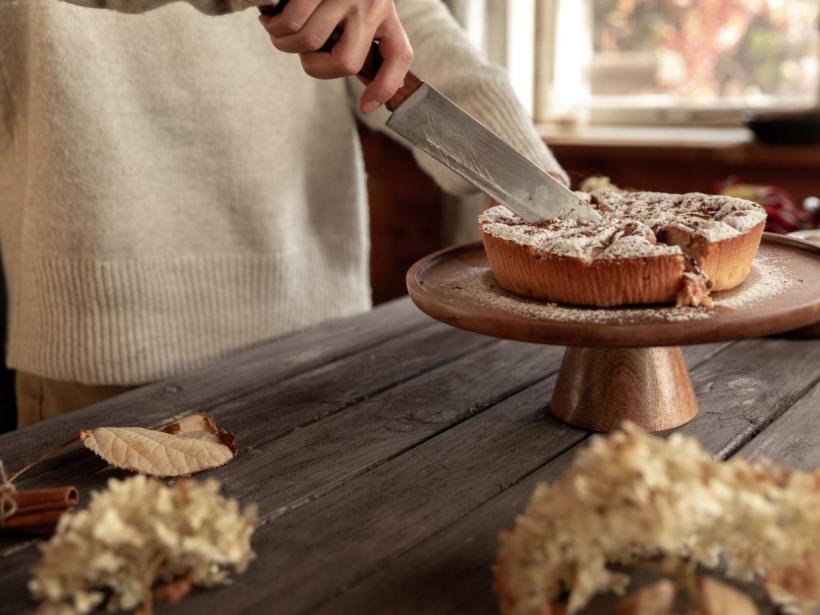
Keep the cheesecake in its springform pan, cover the top loosely with foil or plastic wrap without letting it touch the surface, and place it on a flat shelf in the fridge. A chilled cheesecake slices neatly when you dip a long, sharp knife in hot water and wipe the blade dry between each cut.
Frequently asked questions
Do I need a water bath for New York cheesecake?
No, a water bath is not traditional for New York cheesecake. The two-stage baking method and gradual cooling give you a smooth top and creamy centre without the extra step.
Why did my cheesecake crack?
Cracks usually happen from overmixing the batter, which adds too much air, or from cooling the cheesecake too quickly. Mix on low speed and let the cheesecake cool in the oven with the door ajar for an hour.
Can I use low-fat cream cheese?
Full-fat cream cheese gives the dense, creamy texture that defines a New York cheesecake. Low-fat versions contain more water and can make the filling grainy or less stable.
How do I get clean slices?
Use a sharp knife dipped in hot water and wiped dry between each cut. The cheesecake must be thoroughly chilled, preferably overnight, for the cleanest edges.
Photo: KATRIN BOLOVTSOVA, Pexels (Pexels License)